
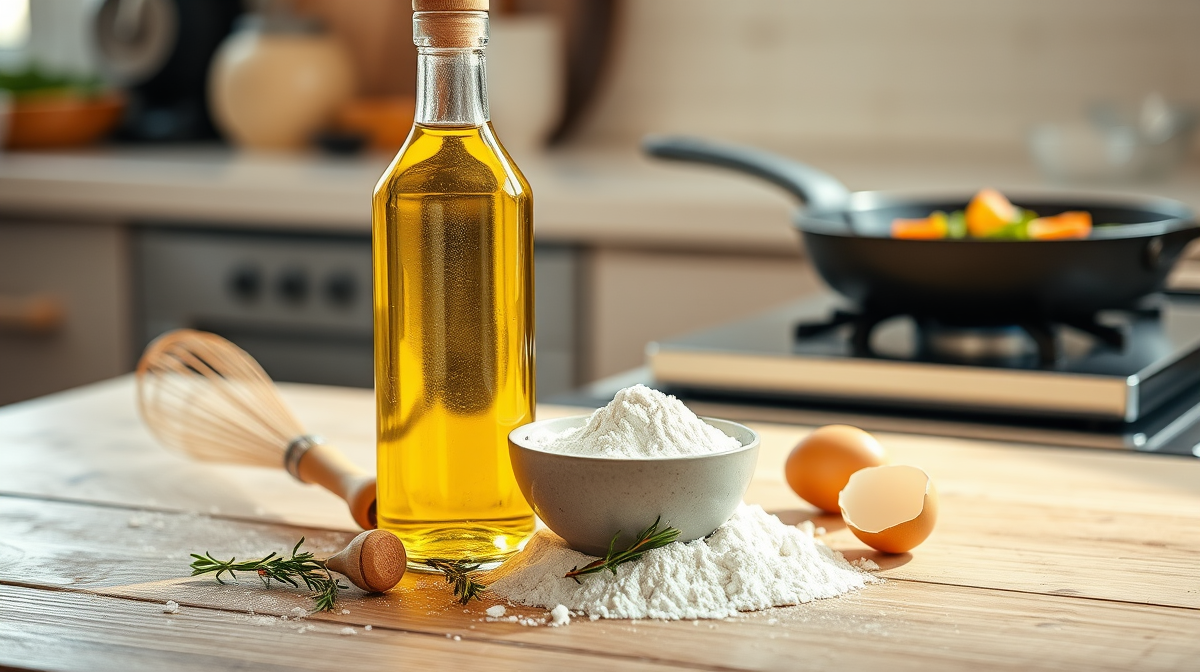
Beyond Cold Dishes
Olive oil isn’t just for salads. In everyday cooking, it quietly improves texture and deepens flavors. Swapping butter for olive oil in sponge cakes makes them lighter and more tender. Stirring a drizzle into mashed potatoes or roasted vegetables adds creaminess without dairy. It also works as a gentle sauté base: over medium-low heat, it draws out the sweetness of onions and garlic without scorching, avoiding the bitter taste that comes from overheated oil. For weekly meal prep, use it to coat baking sheets instead of parchment when roasting root vegetables.
In Baking and Quick Breads
This is where olive oil is often overlooked. Adding it to muffins, cookies, or sourdough loaves brings a subtle fruity note and keeps crumb moist. The trick is choosing a mild, not overpowering, oil and mixing it with your wet ingredients. In quick breads, you can replace up to 30% of solid fat with oil to cut calories while boosting moisture. Try brushing the surface of bread before baking for a richer, crispier crust. Consistency matters more than prestige when building your pantry routine.
Storage and Temperature Tips
Heat and light break down olive oil’s quality over time. Keep it in a dark glass jar in a cool, dry cupboard, never near the stove. For high-heat stir-frying, use a refined oil or blend it half-and-half with extra virgin. Extra virgin shines in low-temperature cooking or finishing dishes. Never reuse heated oil multiple times; always start fresh to preserve its flavor and stability. When buying in bulk, split it into smaller containers to limit air exposure each time you open it.
Choosing the Right Oil for the Job
Not all olive oils do the same work. For dressings and finishing, look for a low-acid extra virgin with a clean, aromatic profile. For medium-heat cooking or baking, a regular virgin or a balanced blend works better. In your pantry, keep two bottles: one for daily use and another saved for special dishes. Rotate them to prevent oxidation and keep the flavor intact. Check the harvest date before buying; fresher oil performs better in everyday recipes and saves money long-term.
- #aceite-de-oliva
- #usos-en-cocina
- #despensa-casera
- #reposteria-saludable
- #tips-cocina