
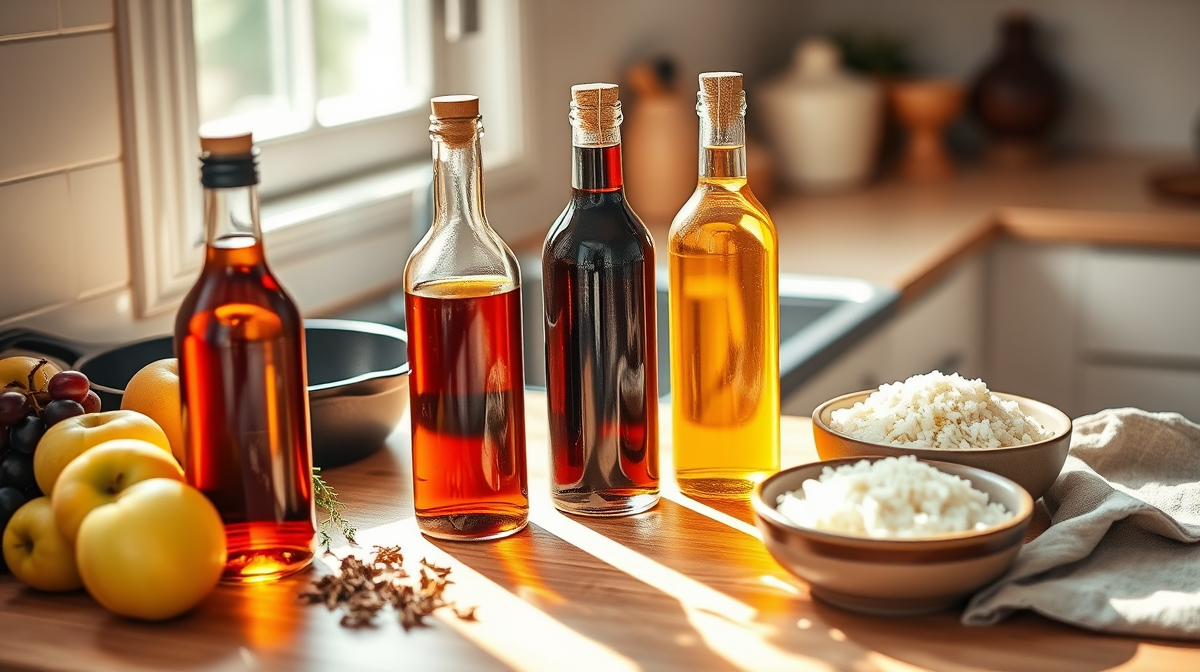
Why not all vinegars behave the same
Vinegar is not a single ingredient; it is a family shaped by its base, fermentation time, and filtration. Apple cider vinegar comes from fermented apples, balsamic from cooked grape must aged in wood, and rice vinegar from fermented rice. These origins dictate their acidity, sugar content, and best uses. In my kitchen, I stopped treating them as interchangeable. Each one brings a different chemical profile to the pan and the jar.
Apple cider vinegar typically sits between five and six percent acidity. It carries a sharp, fruity punch and works best when you want brightness without heavy sweetness. Balsamic vinegar varies wildly. Industrial versions are sweet and thick, while traditional aged balsamic is complex, syrupy, and balanced. Rice vinegar, usually around four to four and a half percent acidity, is mild and slightly sweet. It does not overpower delicate ingredients, which makes it the go-to for Asian-inspired dressings and quick pickles.
Where to store them: pantry or fridge?
Storage depends on acidity and pasteurization. High-acid foods naturally resist spoilage, but light and temperature still matter. I keep unopened bottles in a cool, dark pantry. Once opened, the rule changes slightly. Apple cider vinegar with the mother (the cloudy sediment) should live in the fridge if you want to preserve its live cultures and prevent slow oxidation. Pasteurized versions stay fine in the pantry for up to a year, though I prefer the fridge to lock in freshness.
Traditional balsamic vinegar is dense and sugary, acting as its own preservative. I store it at room temperature, away from direct light, and always tighten the cap after use. Rice vinegar, being milder, loses its delicate aroma quickly. I move it to the fridge after opening to protect its subtle profile. This matches the guidance on temperature zones in my kitchen, ensuring acids do not degrade under heat or light. You can read more about how to manage storage zones effectively in my guide on fridge temperature zones.
How to use them in the pan and on the plate
In the kitchen, I separate vinegars by function. High acidity means better deglazing power. I reach for apple cider vinegar when I need to lift fond from a hot skillet. The sharpness cuts through fat and releases flavor instantly. I add it after removing the pan from direct heat to avoid bitter evaporation. For quick marinades, I dilute it with oil and a pinch of salt. The acidity tenderizes proteins without turning them mushy, provided I limit the time to forty-five minutes for poultry or fish.
Rice vinegar belongs to the finishing category. I drizzle it over cooked vegetables, stir-fries, or grain bowls right before serving. The mild acidity brightens the dish without competing with soy, ginger, or sesame. I avoid cooking it down aggressively, as the delicate esters disappear under prolonged heat. Balsamic vinegar is different. Young balsamic can handle gentle simmering in glazes or reductions, while aged balsamic is strictly a finishing agent. I use it sparingly over roasted root vegetables, fresh cheese, or even strawberries. The goal is balance, not dominance.
Adjusting flavors in daily cooking requires knowing which acid to trust. I always taste before adding more. If a sauce feels heavy, a few drops of rice vinegar lift it without altering the base. If a stew needs structure, apple cider vinegar adds backbone. Balsamic demands restraint; one teaspoon often changes the entire profile. You can explore more techniques for balancing acidity, sweetness, and salt in my practical guide to flavor adjustment.
Three practical pairings to try today
First, a quick pan deglaze for chicken thighs. Sear the meat, remove it, pour in half a cup of apple cider vinegar, and scrape the bottom. Return the chicken, add broth, and simmer for ten minutes. The acid cleans the pan and builds a light, tangy sauce.
Second, a rice vinegar pickle for summer nights. Thinly slice cucumber and red onion, toss with two parts rice vinegar, one part water, and a pinch of sugar. Let it rest for twenty minutes. Drain and fold into lettuce wraps or grain salads. The mild acid preserves crunch without pickling the vegetables into submission.
Third, a balsamic finishing drizzle for roasted cauliflower. Toss florets with olive oil and salt, roast until caramelized, then remove from heat. Drizzle with a teaspoon of aged balsamic and crack black pepper over the top. The contrast between char, fat, and acid creates depth without extra steps.
Vinegar is a tool, not a shortcut. Knowing the differences saves ingredients, prevents ruined sauces, and keeps your pantry organized. Keep them labeled, store them according to acidity, and use them with intention. Your daily cooking will notice the difference.
Sources
- Agencia Española de Seguridad Alimentaria y Nutrición (AESAN). Guidelines on acidic food storage and pantry and refrigerator conservation.
- Harvard T.H. Chan School of Public Health. The Nutrition Source: Vinegar in a Balanced Diet.
- #vinagre
- #conservacion-cocina
- #sazonar-platos