
Balance Starts in the Pantry
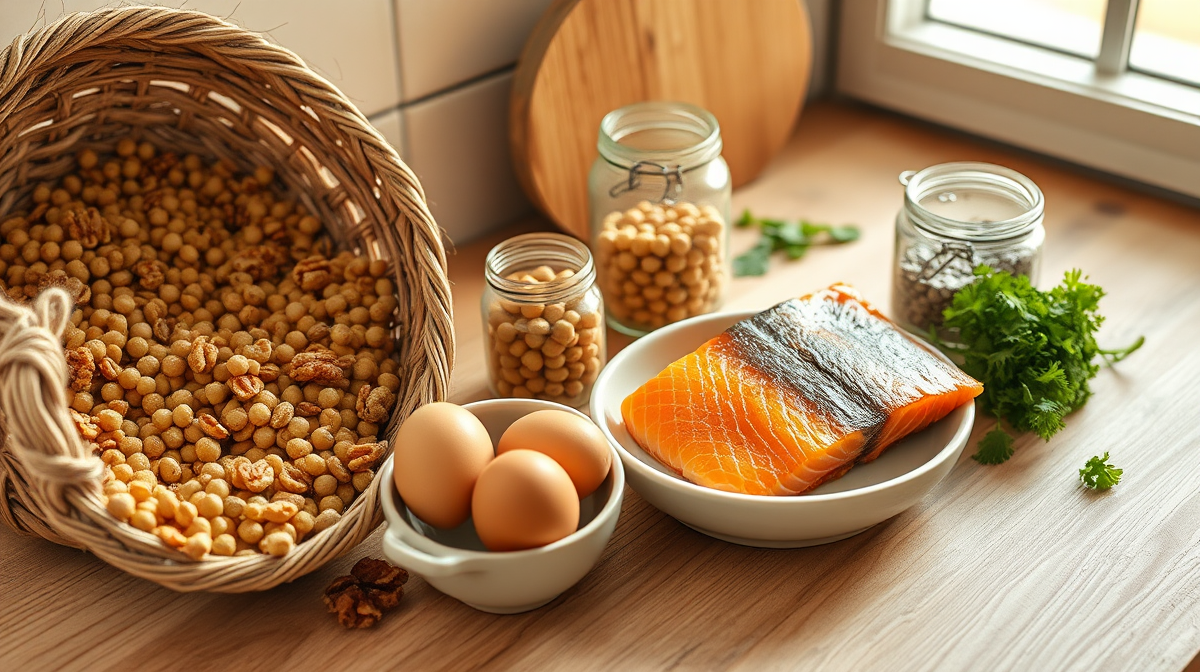
Talking about protein is no longer a competition about who wins. In everyday home cooking, the goal is simple: variety and moderation. Animal proteins (chicken, fish, eggs, dairy) and plant proteins (legumes, tofu, tempeh, nuts) offer different amino acid profiles and micronutrients. There’s no need to count every gram; rotating them throughout the week and prioritizing whole foods is enough. Keep chickpeas, dried lentils, eggs, and a good cut of frozen fish always stocked.
Build Your Plate Without Overthinking
Use the bowl method. Half the plate should be raw or cooked vegetables. Split the remaining half between starches and protein. If you choose meat or fish, pair it with plenty of vegetables and a light side. For plant-based options, combine two sources throughout the day (like lentils with rice, or chickpeas with quinoa) to cover all essential amino acids.
Tips for Real Kitchen Life
- Weekly rotation: Alternate days of animal protein with days of legumes or textured soy. This keeps fiber high, reduces environmental impact, and prevents boredom.
- Batch prep: Cook a pot of chickpeas or black beans on Sunday. Freeze in individual portions for quick stir-fries, salads, or emergency soups.
- Natural boosters: A squeeze of lemon over legumes improves iron absorption. A handful of pumpkin or sesame seeds adds extra protein and crunch without any processing.
Listen to Your Body, Not the Trends
Everyone has different needs depending on activity, age, and metabolism. If you cook for a family, prepare a neutral base (rice, quinoa, or whole wheat pasta) and add the appropriate protein to each dish. Balance isn’t mathematical; it’s consistency. Cook with what you have, try new combinations, and let your table set the pace. For a sustainable approach, note in your weekly planner which days feature plant protein and which feature animal protein. This avoids last-minute ultra-processed shortcuts and keeps your budget in check. Try gentle cooking methods like braising, steaming, or baking. They preserve nutrients better than high-heat frying and make even humble ingredients taste richer. Small adjustments in the kitchen lead to steady results at the table.
- #proteinas
- #comida-casera
- #equilibrio-alimenticio