
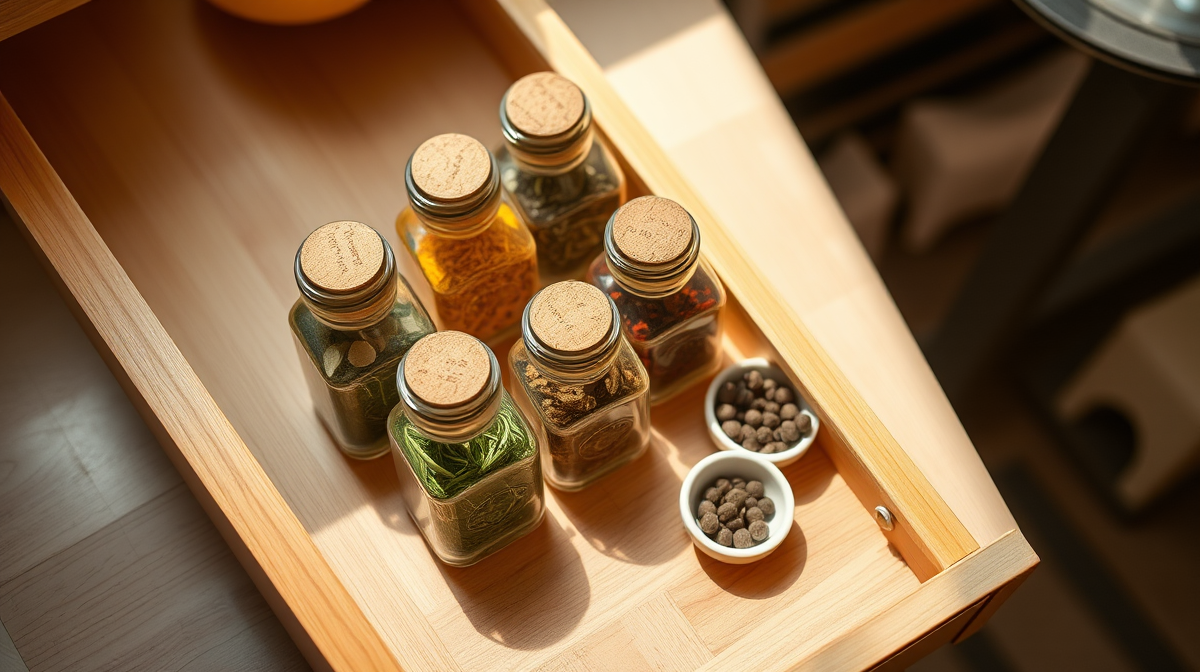
Why the drawer becomes the silent enemy of your spices
Years of running Umami Cook have taught me one thing: many home cooks buy high-quality spices only to toss them into a random drawer. The result is predictable. Aromas bleed into each other, fine dust settles everywhere, and the final flavor is flat. Spices are not canned goods. They are concentrated volatile oils. When exposed to poor conditions, they oxidize, absorb moisture, or pick up foreign odors. Organizing a drawer is not an aesthetic exercise. It is active preservation. If you want your condiments to last months and keep their character, treat them with the same respect you would give a good olive oil or an aged cheese.
The conservation triangle: light, air, and humidity
Before buying jars or dividers, understand the three factors that destroy aroma. Intense light, whether natural or artificial, breaks down volatile compounds. Air enters every time you open a loose lid or a poorly sealed pouch. Humidity is the real enemy. It comes from pressure cookers, sink steam, or unventilated kitchens. When spices absorb moisture, they lose potency and can develop invisible mold. The solution is not an airtight cabinet. It is a stable environment. Choose an interior drawer, far from the oven and sink. Add a light barrier: a black cork sheet or an opaque cardboard insert on the top side. Use containers with silicone gaskets and snap closures. Avoid transparent glass jars near kitchen windows. If you live in a humid area, place a small silica gel packet on the drawer bottom (replace when it changes color) or a tablespoon of uncooked rice in a cloth pouch. Skip loose rice on the shelf. It absorbs moisture slowly and leaves residues. Control matters more than improvisation.
Practical drawer zoning without flavor cross-contamination
The most common mistake is grouping by color or size. The correct criterion is aromatic family and intensity. Divide the drawer into three clear zones. Zone 1: neutral bases and ground cereals (paprika, cumin, turmeric, garlic powder). Zone 2: dried herbs and blends (oregano, rosemary, thyme, herbes de Provence, mild curry). Zone 3: strong and spicy spices (black pepper, cardamom, saffron, chili flakes, cinnamon). Use bamboo or food-grade silicone dividers to create real compartments. If you prefer not to buy separators, place taller jars at the back and shorter ones in front, creating a visual slope that prevents cross-spillage. Never mix heavy-oil spices (like cumin or coriander) with delicate herbs (like basil or parsley). The odor impregnates in minutes. Label each container with the exact name and opening date. A chalkboard marker or kraft paper label with a permanent marker works better than heat-sensitive stickers that peel off. If you need to understand how to distribute space without feeling overwhelmed, read about optimizing your kitchen flow for daily friction points.
The 15-day rotation system and labeling that actually works
Spices do not expire like milk, but they lose about 30% of their potency after six months of opening. Implement a simple rotation system: when you open a new jar, write the date on the lid. When you reach day 15, prioritize using it. By month three, test its power. Rub two fingers together and smell. If the aroma is faint or dusty, it is time to replace it. Do not discard it. Use it for infusions or to clean steel pots. Organize jars in parallel rows, all facing the same direction, with the neck toward the front. This prevents them from tipping when you open the drawer. Check the drawer bottom monthly. Remove dust, wipe dry, and refresh the humidity barrier. If your pantry already uses a rotation system, extend it here to avoid duplicate purchases and reduce kitchen waste.
Sources
Agencia Española de Seguridad Alimentaria y Nutrición (AESAN). Home food storage and preservation guidelines. Recommendations on humidity control, temperature stability, and prevention of cross-contamination.
Harvard T.H. Chan School of Public Health. Nutrition Source: Spices and Herbs for Health. Information on volatile compound stability and environmental factors affecting the nutritional and organoleptic quality of spices.
- #especias
- #organizacion-cocina
- #conservacion-alimentos