
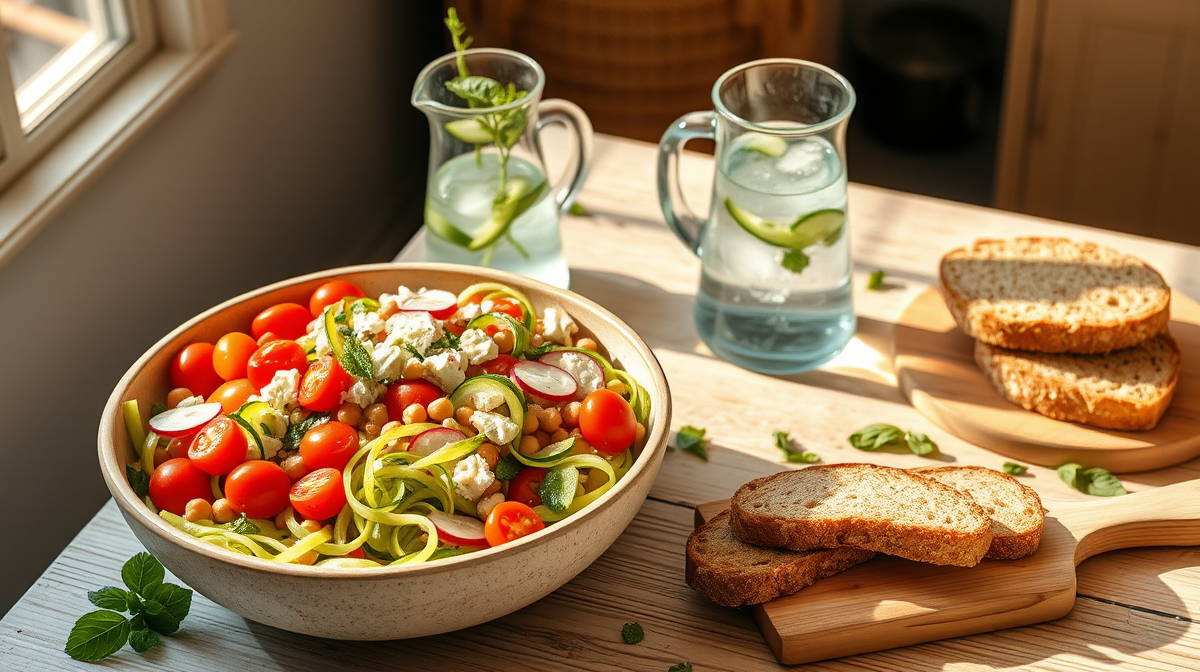
A few years ago, in the middle of a July heatwave, I made the same mistake many parents make: thinking that eating lightly meant reducing dinner to a bowl of leafy greens and a few tomato slices. The result was predictable: by ten at night, my stomach would rumble, and I ended up raiding the pantry. As a mom who cooks daily at Umami Cook, I learned that lightness has nothing to do with scarcity. It is about volume, hydration, and the right macronutrient combination to trigger satiety signals without digestive heaviness.
Why leaves alone don’t cut it in summer
Heat diverts blood flow toward the skin to regulate body temperature, which naturally slows digestion and reduces appetite. If you only eat raw vegetables, you get water and fiber, but you miss out on proteins and quality fats needed to activate satiety hormones like cholecystokinin. My golden rule is straightforward: every dinner must include at least 20 grams of protein, a tablespoon of good fat, and a touch of acidity. Acidity doesn’t just balance flavor; it stimulates gastric juice production and improves nutrient absorption.
Your summer plate formula: volume + protein + fat + acidity
Building a light but complete dinner is about proportions. I use a tray system to keep everything ready in the fridge, as I explain in my weekly meal organization guide. Mentally divide your plate:
- 50% high-water vegetables: cucumber, zucchini, celery, romaine lettuce, radishes, or bell pepper. These add volume without dense calories.
- 25% easily digestible protein: shredded chicken, white beans, chickpeas, firm tofu, or cold scrambled eggs.
- 15% smart carbs or fats: cold quinoa, farro, cooled roasted sweet potato, or half an avocado.
- 10% fat and acidity: extra virgin olive oil, sesame seeds, lemon juice, or apple cider vinegar.
This distribution prevents insulin spikes and keeps energy stable until bedtime. Additionally, cooling cooked carbohydrates creates resistant starch, which acts as a prebiotic and improves intestinal satiety.
3 light dinners I prepare in 15 minutes
-
White bean and cucumber gazpacho Blend 1 can of rinsed white beans, 1 peeled and chopped cucumber, 1 garlic clove, half a lemon’s juice, and 2 tablespoons of olive oil. Add cold water until you reach your desired consistency. Serve with raw cucumber cubes and pumpkin seeds. The beans provide protein and soluble fiber; the cucumber hydrates. Perfect for days over 35 degrees.
-
Shredded chicken with zucchini noodles and sesame sauce Sauté freshly spiralized zucchini noodles for 2 minutes. Mix with 150g of cooked, shredded chicken breast. Dress with 1 tablespoon low-sodium soy sauce, 1 teaspoon sesame oil, lime zest, and fresh cilantro. The combination of animal and plant protein creates a complete amino acid profile without overloading the stomach.
-
Chickpea, roasted tomato, and fresh cheese salad Mix 1 can of cooked chickpeas, 2 ripe tomatoes roasted in a pan, 100g of 5% fat fresh cheese, and chopped chives. Dress with sherry vinegar and a pinch of cumin. The fresh cheese provides casein, a slow-digesting protein that keeps you full for hours. If you want to dive deeper into reducing salt without losing flavor, check my article on acidity and umami.
Tips to keep you satisfied until tomorrow
- Do not skip dinner. Skipping it spikes cortisol and triggers impulsive hunger the next day. A light, balanced dinner stabilizes overnight metabolism.
- Use temperature contrast. Serve raw vegetables very cold and hot components (like chicken or legumes) at room temperature. The thermal shock stimulates satiety receptors.
- Prioritize chewing. In summer, we tend to eat quickly. Cut ingredients into visible pieces and chew 20 times. It takes the brain 20 minutes to register fullness signals.
- Prep the base on Sunday. I wash and dry leaves, cook legumes, and store them in airtight jars. This way, I only mix and dress in 5 minutes. If you need help with organization, see my post on the fridge tray system.
Eating lightly in summer is a habit built with structure, not restriction. By combining vegetable volume, clear protein, and natural acidity, you avoid midnight hunger without sacrificing energy or flavor. Cook calmly, measure with your eyes, and trust that your body knows exactly what it needs.
Sources
- Agencia Española de Seguridad Alimentaria y Nutrición (AESAN). Guide to healthy eating during hot weather. Recommendations on hydration and macronutrient distribution in summer.
- Harvard T.H. Chan School of Public Nutrition. The Nutrition Source: Protein and Satiety. Analysis on the relationship between protein, fiber, and hormonal satiety signals.
Read more about legumes in easy cooking Reduce salt without losing flavor using acidity and umami
- #cenas-estivo
- #volumen-alimentos
- #menu-verano-2026