
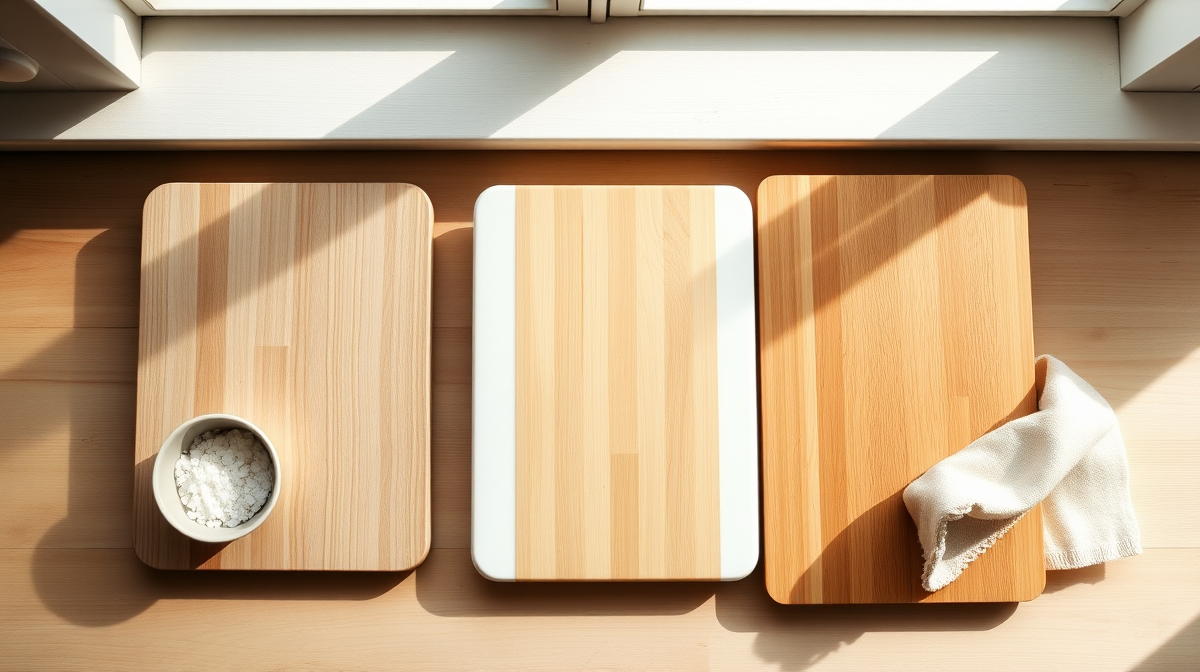
Choose Based on Your Daily Routine
At home, we don’t need a board for every ingredient, but knowing which material fits our cooking rhythm makes a real difference. If you cook quickly and use standard kitchen knives, softwood (like ash or walnut) is your best friend: it’s gentle on edges and absorbs surface moisture naturally. Plastic is the go-to if you value visual hygiene and want to toss everything in the dishwasher. Bamboo, while marketed as the ultimate eco-friendly option, is extremely hard and will dull your blades faster.
Real Differences in Use
Wood contains natural antimicrobial compounds and self-heals from light cuts. Plastic doesn’t absorb liquids, making it the safer choice for raw meat, poultry, or wet vegetables that could cross-contaminate other surfaces. Bamboo is moisture-resistant but can split under heavy impact or sudden temperature changes. In a family kitchen, the smart move is to keep two: a wooden board for vegetables, bread, and cooked proteins, and a color-coded plastic board exclusively for raw meats.
Maintenance That Extends Lifespan
The most common mistake is leaving boards soaking or storing them damp. Hand-wash with warm water and mild dish soap, dry upright, and never put wood in the dishwasher. To preserve wooden boards, apply food-grade mineral or almond oil once a month; it seals the fibers, blocks odors, and prevents cracking. If your plastic board is deeply grooved or cracked, replace it: those scratches harbor bacteria. An occasional deep clean with diluted white vinegar or baking soda is enough to refresh them.
Quick Tips for Real Home Cooking
- Assign colors or labels to each board to prevent cross-contamination without second-guessing.
- Store boards on a rack or vertical holder to ensure airflow and stop musty smells.
- Check your knife edges: a dull blade requires more pressure and leaves deeper grooves in any material.
- If you do Sunday meal prep or weekly planning, use plastic for portioning raw proteins and wood for assembling salads or plating. This keeps your pantry and workspace organized while minimizing risk.
- #utensilios
- #organizacion
- #cocina-casera