
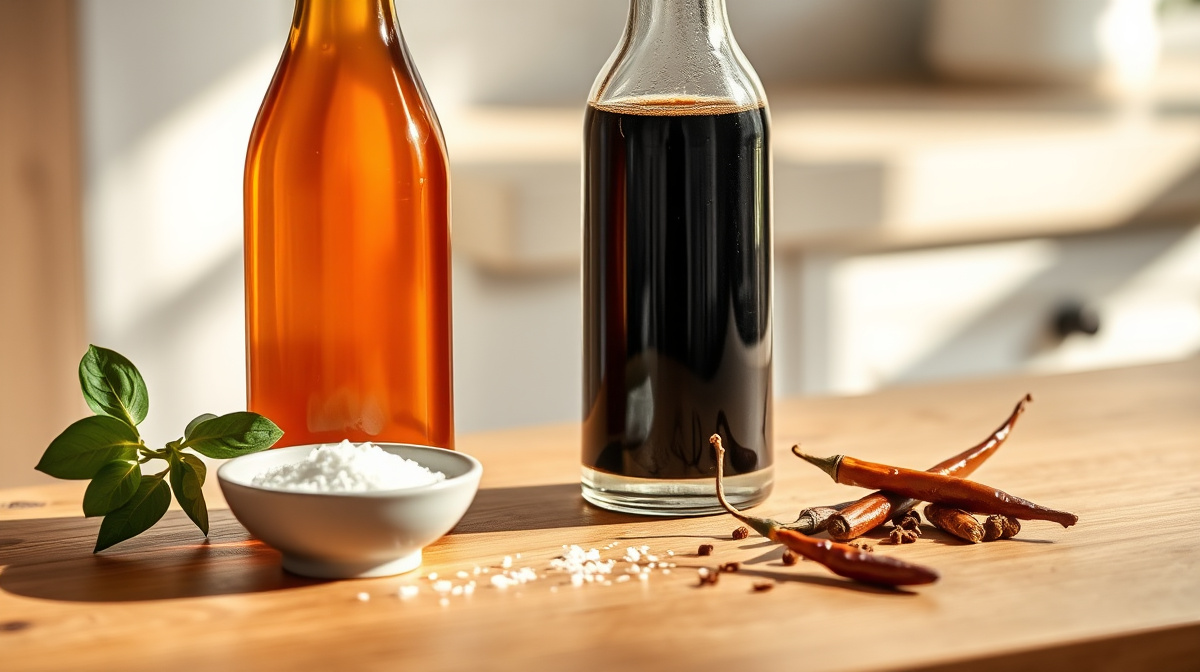
Origin and flavor: What’s inside?
Fish sauce comes from the long fermentation of small fish with salt, a staple in Southeast Asian cuisine. Its profile is intense, umami-rich, and slightly salty, with a strong aroma that mellows once cooked. Soy sauce, on the other hand, is made from fermented soybeans and wheat, dominating East Asian kitchens. It offers a more balanced flavor with sweet and savory notes, working as both a base seasoning and a finishing condiment.
When to use each in daily home cooking
Choose fish sauce for broths, homemade curries, meat marinades, or stir-fried vegetables where you want depth without darkening the dish. Soy sauce shines in salad dressings, noodle glazes, and quick stews or wok rice. Both amplify natural flavors, but their visual and textural impact differs depending on your recipe.
How to combine them and balance saltiness
You don’t have to choose one over the other; layer them. Add soy sauce early to season and a splash of fish sauce at the end to boost umami. Remember, both are highly concentrated in salt; cut back on added salt and taste before adjusting. For a milder touch, dilute one tablespoon in two of water or lime juice before stirring it in. To swap one for the other at a 1:1 ratio, balance it with a dash of rice vinegar or a bit of grated ginger.
Pantry tips for everyday use
- Look for labels with simple ingredients: fish/salt or soy/wheat/water/salt.
- Avoid versions with added fructose syrup or artificial colors.
- Store them sealed in a cool place; refrigerating extends their life without losing quality.
- Measure always with a standard tablespoon and balance with lime or honey if using more than two.
- Note in your weekly planner which proteins and vegetables pair best with each sauce. This way, your shopping list stays focused and you avoid duplicates.
Try adding a teaspoon to your onion and garlic base at the start; heat will release its aromas without overpowering the dish. With these small adjustments, your weeknight meals gain complexity without extra steps. Label them with an opening date to track freshness, and you’ll always have reliable umami for batch cooking and quick dinners.
- #salsa-de-pescado
- #salsa-de-soja
- #umami-casero