
Why Herbs Lose Their Aroma Faster Than You Think
Buying a fresh bunch of basil or cilantro and watching it wilt in two days is one of the most common frustrations in daily cooking. It is not a lack of care, but a matter of botanical structure and humidity. Herbs are composed of essential oils that evaporate or oxidize when exposed to air, light, and excessive moisture. Additionally, as living organisms that continue to respire after harvest, they produce ethylene and lose turgidity if stored in sealed environments without ventilation. The usual mistake is putting them directly in the fridge inside a tight plastic bag or tossing them into the vegetable drawer without any prep. Sealing them traps moisture, which accelerates invisible mold growth. Leaving them out dries them out and strips their volatile compounds. The solution is not complicated, but it does require understanding how each type behaves and respecting its natural rhythm.
The Structure Rule: Delicate vs. Woody
Not all herbs preserve the same way. The key lies in their tissue. Delicate herbs (basil, cilantro, parsley, chives, and mint) have tender stems and leaves that hydrate and wilt quickly. Woody or semi-woody herbs (rosemary, thyme, oregano, sage, and bay) have thicker cuticles, lower water content, and more stable oils that resist cold and dehydration better.
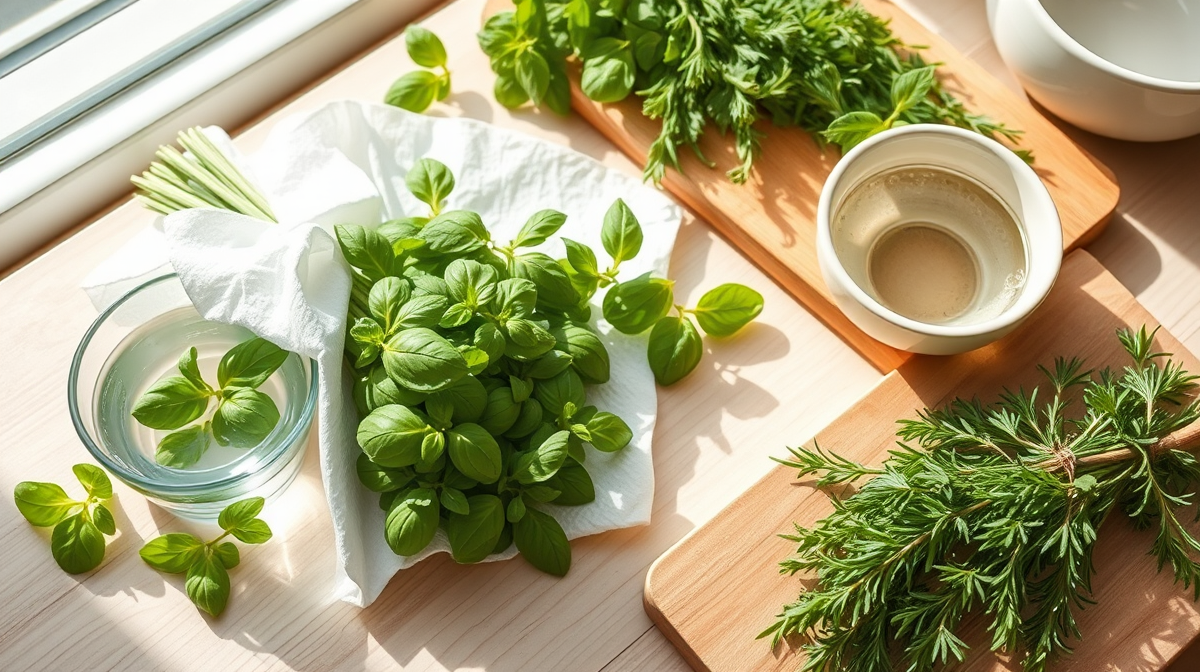
For delicate herbs, the “bunch in water” method works best. Trim the stems diagonally, place them in a glass with two inches of cold water, and cover loosely with a clear plastic bag to allow slight air circulation. Store it in the least cold part of the fridge, away from fruits like apples or bananas, which speed up ripening with their ethylene output. For woody herbs, controlled drying or freezing in dry layers is ideal. Wash them, dry them thoroughly with paper towels or a spinner, and store them in a glass jar with a tight lid in a cool, dark place, or freeze them in trays with a sheet of paper between layers to prevent sticking.
A 5-Minute Weekly Routine
Integrating herb preservation into your routine does not require hours. Five minutes on shopping day or when you get home is enough. First, inspect and discard any leaves that already show brown spots or a slimy texture. Then, sort them into two groups: delicate and woody. Delicate ones go into the water glass or, if you plan to use them within three days, into freezing in ice cube trays with olive oil or water (briefly blanched for 10 seconds and shocked in ice water to lock in color and aroma). Woody herbs can be air-dried in a ventilated spot for a day or frozen directly without processing, as they retain their profile better if the cells are not broken prematurely.
When you need them, do not thaw them slowly. Add them directly to the dish at the last minute, or briefly fry them in warm oil to release their essential oils in a controlled way. If using them in long-simmered stews, add them in the final stage or even off the heat, so prolonged heat does not volatilize their aromatic compounds. For a smoother integration, keep the water glasses in the middle fridge shelf and the woody herb jars in the pantry, following a daily use flow without mixing temperatures. If you want to optimize space and visibility, check how to organize your fridge zones so each food finds its ideal temperature and apply the same visibility logic to your herbs.
How to Reactivate Aroma When It Fades
Sometimes, due to unexpected events or poor planning, herbs lose intensity before time. A useful trick is mechanical activation: rub the leaves between your fingers or pass them lightly through a mortar with a pinch of salt. The friction releases trapped oils and revives the aroma. You can also toast them briefly in a dry skillet over medium heat, stirring constantly for a minute, which concentrates their notes without burning them. If they are completely dry and odorless, it is better to substitute them with quality dried versions or freshly ground spices, as their chemical profile has changed irreversibly. To learn how to freeze the rest of your leftover ingredients and maximize every purchase, you can review this home freezing method to maintain texture and flavor.
Sources
- AESAN (Spanish Agency for Food Safety and Nutrition). General recommendations on preservation and safety of fresh foods.
- Harvard T.H. Chan School of Public Health. Nutrition Source: Guidelines on storing fresh produce and minimizing nutrient loss in home kitchens.
- #hierbas-frescas
- #conservacion-alimentos
- #aroma-cocina