
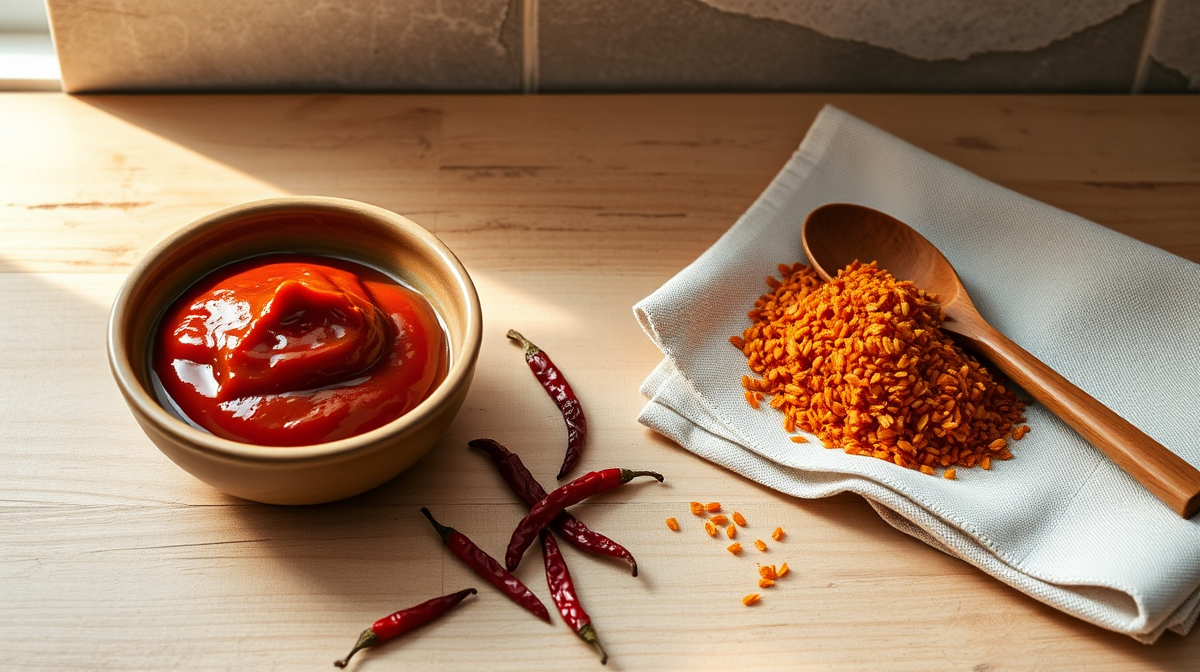
What exactly are they?
Gochujang is a fermented paste made from red chili, glutinous rice, soy, and malt. Its profile is complex: spicy, umami, slightly sweet, and deep. Gochugaru is the chili flake or powder, unfermented, providing that vibrant red color and direct heat. In Western pantries, they are often confused, but they serve different purposes.
Where to find them and how to choose
Look for Korean brands in Asian aisles or specialty stores. For gochujang, prioritize versions listing “glutinous rice flour” or “fermented soy” and avoid those loaded with sweeteners. For gochugaru, there are two main cuts: chotgaru (fine, for soups) and pulgar (coarse, for stews and marinades). The coarser grind retains more of the chili’s natural aroma.
How to use them in everyday cooking
Do not treat them as direct substitutes for regular chili powder or hot sauce. Follow these tips to integrate them into your routine:
- Always hydrate gochujang with broth or water before adding it to pots.
- Toast gochugaru in cold oil to extract its color and aroma without burning.
- Add a teaspoon to pork stews, lentils, or roasted vegetables to build depth.
- If you batch cook, stir both into the base at the start; low heat allows the flavors to meld across your weekly containers.
Storage and portioning
Once opened, always keep them refrigerated. Gochujang stays good for months without losing quality, while gochugaru oxidizes quickly with light and heat. Divide unused portions into small glass jars and freeze what you won’t use within two weeks. This keeps heat control in your hands and reduces waste, making them reliable staples for your weekly planning. Both ingredients are affordable and shelf-stable when handled correctly. Store them away from stoves and ovens; consistent temperature is key to preserving the enzymes and volatile compounds in the chili. With a little practice, you will move past using them as a quick spice and start building foundational flavor bases for rice, noodles, or homemade broths.
- #gochujang
- #gochugaru
- #cocina-coreana