
Why Leaves Turn Slimy
That slimy film that appears on lettuce, spinach, or arugula isn’t magic—it’s bacteria and trapped moisture. Green leaves constantly breathe and release water. If you store them wet in a sealed container, that humid, stagnant environment becomes an invitation for spoilage within hours. As a mother who cooks daily, I stopped throwing away half a bag of arugula each week once I learned to control that moisture from the very first step. The secret isn’t buying cheaper produce or hunting down exotic varieties; it’s managing water and airflow with precision. When the leaf’s cell walls break or become oversaturated, they lose rigidity and develop that unappetizing mushy texture.
The Right Wash (Without Damaging Them)
Forget the strong tap stream aimed directly at the bunch. Pressure ruptures cells, releases more juice, and accelerates browning at the edges. Fill a sink or a large bowl with cold water. If you have a fine-mesh colander, use it, but the water should be still. Submerge the leaves and gently swirl them with your hands. Dirt and soil will sink to the bottom. Remove leaves one by one, give them a light shake, and change the water if it gets too cloudy. Never scrub or squeeze them. For romaine or iceberg lettuce, trim the base, open the leaf, and wash the inside carefully. Cold water boosts cellular turgor and keeps that crisp bite. Warm water makes leaves wilt before they even reach the table. For tightly layered lettuces, you can add a tablespoon of white vinegar to the initial soak: it helps loosen dirt without damaging the leaf structure.
Drying: The Step Everyone Skips
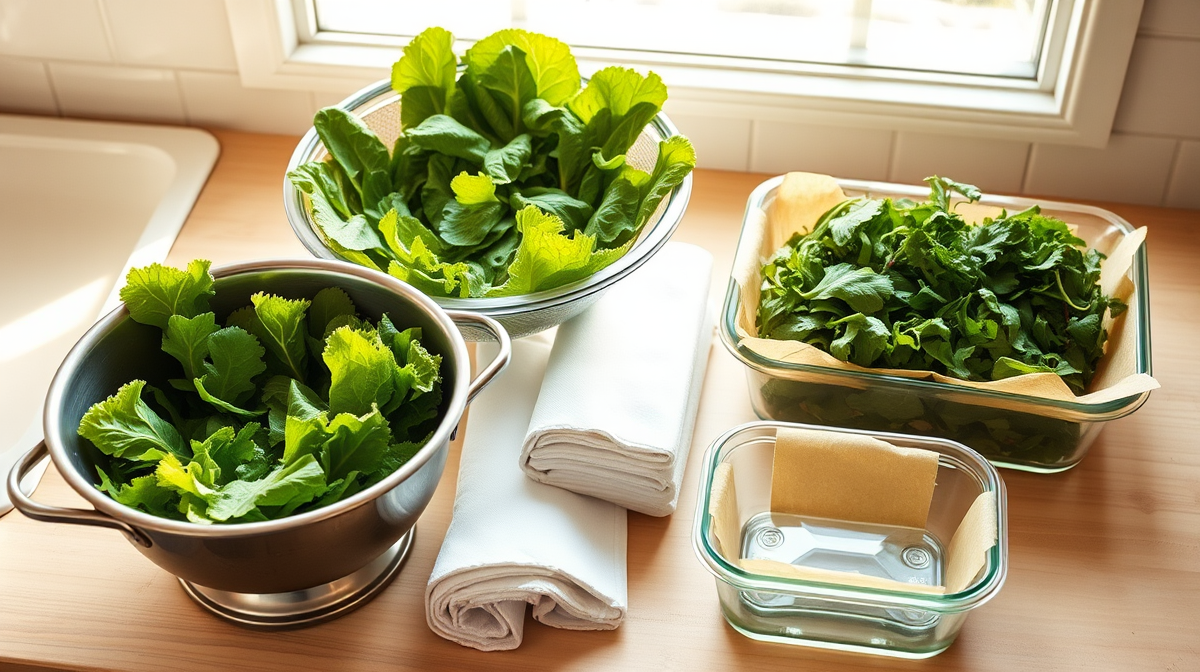
This is where most home cooks ruin their salad. If wet leaves go straight into the fridge, moisture gets trapped, leading to that damp smell and that stale, metallic taste. You have two quick, household-friendly options. First: a manual salad spinner. Load the leaves into the basket, spin at a steady pace, and watch the water shoot out the sides in seconds. It’s fast, but it doesn’t remove the microscopic water trapped between the veins. Second, more effective: paper towels or clean cotton kitchen cloths. Spread the leaves over a thick layer, cover with another, and press gently with your palms. Do not rub; just press to absorb. If you have a kitchen fan or crack a window, let them air-dry for five minutes before storing. The goal is for them to feel cool but not drip. A dripping leaf is a spoiling leaf.
How to Store Them for Days
The perfect container is one that allows airflow. Airtight plastic or glass containers without ventilation are the graveyard of greens. Use a glass container with a lid, but place a paper towel at the bottom, add the leaves, cover with another towel, and close without sealing tight. The towels absorb the natural sweat of the vegetable; change them every two days to prevent saturation. Another option is a breathable fabric bag or the mesh produce bags used at farmers’ markets. If storing whole heads, wrap them in paper towels and place them in a fabric bag or a container with the lid slightly ajar. Never wash them before storing if you won’t use them within 24 hours. Romaine and iceberg hold up to a week; arugula, baby spinach, and corn salad should be eaten within three days. The ideal temperature is the lower fridge drawer, between 4 and 5 °C. If you want to extend this trick into your weekly routine, here’s a link to my tray system for the fridge that organizes everything without stress: /es/blog/sistema-bandejas-nevera-cenas-semana/.
A Secret Trick for Dressings
Vinegar is a secret ally. If you notice a leaf starting to lose firmness, add a teaspoon of apple cider vinegar to the wash water. The acid lowers the surface pH, slows bacterial growth, and keeps the color vibrant. Rinse with clear water and dry thoroughly. For dressing, never pour sauce directly onto leaves that will be stored. Dress them right before serving. Salt draws water out of leaves through osmosis; if you salt them in advance, they’ll turn into soup. Use lemon juice, extra virgin olive oil, and a pinch of honey or mustard to emulsify. If you’re interested in how to balance flavors without overusing salt, here’s my practical guide: /es/blog/ajustar-sabores-acidez-dulzor-sal/.
Sources
Food safety guidelines for washing fresh vegetables are backed by the WHO, which recommends rinsing with potable running water to reduce surface microbial load. For green leaf storage and the impact of humidity on shelf life, reference has been made to Harvard T.H. Chan School of Public Health’s guide on fresh produce storage.
- #ensaladas
- #conservacion-verduras
- #preparacion-cocina