
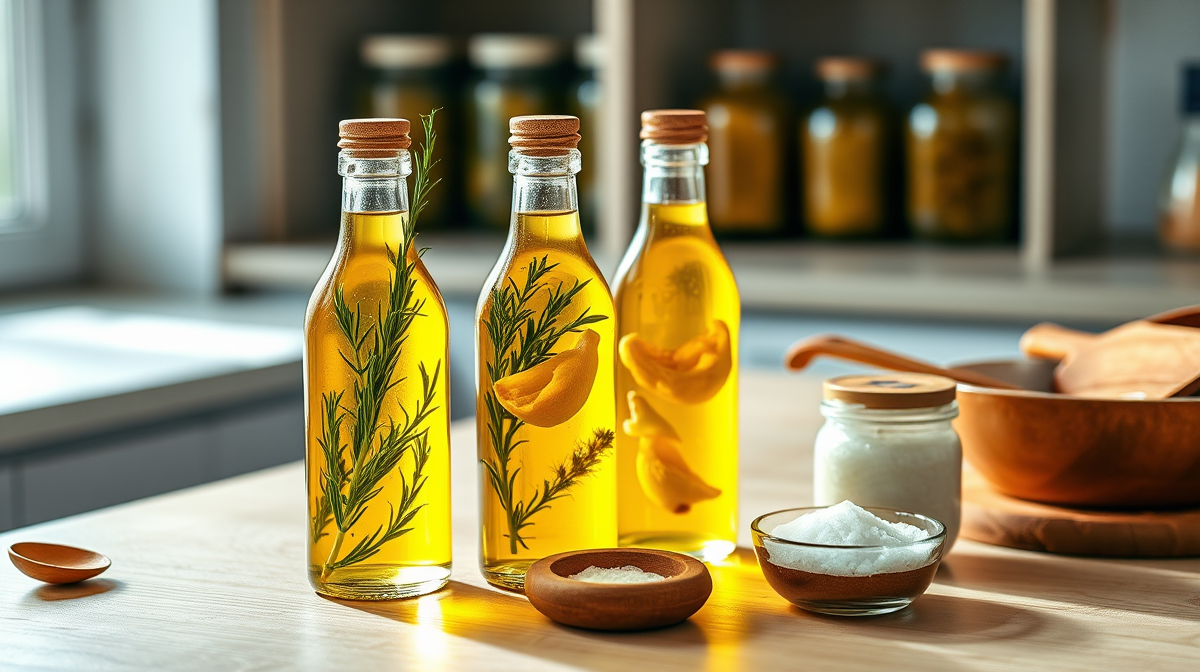
Why homemade flavored oils are a safety challenge
Making flavored oils at home feels like a natural step for anyone who loves cooking. We all want that garlic, rosemary, or lemon essence that turns a simple salad or a plain piece of fish into something special. But after years of running my kitchen and reviewing food safety protocols, I have to be honest with you: oil is not an inert medium. It is a carrier. And when we add fresh vegetables or damp herbs to it, we are creating the perfect environment for dangerous bacteria to thrive without you seeing it. This is not about demonizing the technique, but understanding it. Olive, sunflower, or sesame oils are pure fats with no water or acidity. Introducing moist ingredients shifts their microbial balance and opens the door to risks that can be easily avoided with a few precise steps. Confidence in home cooking comes from precision, not improvisation.
The real risk: botulism and moisture in oil
When we talk about homemade oils, the one term every home cook must know is botulism. Clostridium botulinum is a bacteria that produces heat-resistant and oxidation-resistant spores. These spores can naturally occur on the roots of vegetables, potato skins, or freshly harvested herbs. In a moist, oxygen-free environment at room temperature, these spores germinate and produce a neurotoxin that does not alter the smell or taste of the oil. In other words, contaminated oil can look and smell perfectly normal. The fat acts as a barrier that removes oxygen around the vegetable, creating that anaerobic environment the bacteria needs to multiply. This is why food safety authorities insist that oils containing fresh or raw vegetables must never be stored outside the refrigerator. This is not a “best practice” suggestion; it is a fundamental food safety rule that protects your entire family.
Golden rules for infusing without danger
If you want to enjoy these oils without taking unnecessary risks, the process must be strict but straightforward. Here are the steps I follow at Umami Cook and recommend you apply exactly:
- Eliminate all moisture: Wash your herbs or garlic, but dry them thoroughly. Use paper towels and let them air-dry for an hour. A trick I use when I am in a hurry is a hairdryer on the cool setting: blow air over the cut vegetables until they are completely dry to the touch. Moisture is the number one enemy.
- Acidify the medium: pH is your best ally. Add a splash of apple cider vinegar or a few lemon slices to the oil. A pH below 4.6 inhibits spore germination. This technique is essential, and I use it whenever I store the oil for more than three days. If you prefer a neutral taste, you can use food-grade citric acid powder (dissolve half a teaspoon in a little water before adding it).
- Controlled heat treatment: If you want to infuse flavors, warm the oil in a double boiler at a low temperature (never above 60-70 °C) for 15 minutes. This does not fully sterilize the oil, but it reduces the initial microbial load. Use a kitchen thermometer to avoid overheating. Extra virgin olive oil is more stable due to its high polyphenol content, but high-oleic sunflower oil also works well.
- Filtration and bottling: Use coffee filters or sterile cheesecloth to remove all solid particles. Oil with leftover garlic or parsley at the bottom is a contamination hotspot. Bottle into sterilized glass jars with airtight seals. Disinfect the lids with 96% alcohol and let them air dry completely.
Storage and shelf life: never leave it out
Once prepared, homemade flavored oil has a limited shelf life. In the refrigerator, it lasts only 3 to 4 days maximum if it contains fresh vegetables or garlic. If you infuse it only with dried herbs (oregano, thyme, rosemary) and submerge them in warm oil, letting it cool while covered, you can extend it to up to 2 weeks in the fridge, provided the jar is clean and bone-dry. I strongly recommend labeling each bottle with the preparation date and contents. Apply the FIFO system I already explain in my pantry organization guide: new batches always go to the back, older ones to the front. Monitor your refrigerator temperature (it must stay between 2 and 4 °C) and never place the bottle on the door, where temperature fluctuations are highest. If you notice a rancid smell, unusual cloudiness, or bubbles at the bottom, discard it immediately. Health leaves no room for error.
Safe usage ideas for your daily kitchen
These oils are not meant for frying or cooking at high temperatures. Heat destroys delicate aromas and can degrade healthy fatty acids. Use them as finishing oils: a thin drizzle over soups that have been taken off the heat, on toasted bread, over fresh cheeses, or in salad dressings. They are also excellent for marinating raw fish like ceviche or adding a final touch to al dente pasta. If you want them ready for the week, freeze the oil in silicone ice cube trays or small bottles; the cold stops any microbial activity and preserves the flavor. This way, you avoid waste and have condiments ready for your quick weekday meals. Remember to use clean tongs or spoons to scoop it out; never introduce fingers or dirty utensils that bring moisture or bacteria into the jar.
Sources
- Spanish Agency for Food Safety and Nutrition (AESAN). Home food safety guidelines: prevention of foodborne illnesses and food storage.
- World Health Organization (WHO). Food safety guidelines: the farm-to-fork approach and microbiological risk control.
- #aceite-aromatizado
- #seguridad-alimentaria
- #conservacion-cocina
- #botulismo
- #umami-cook