
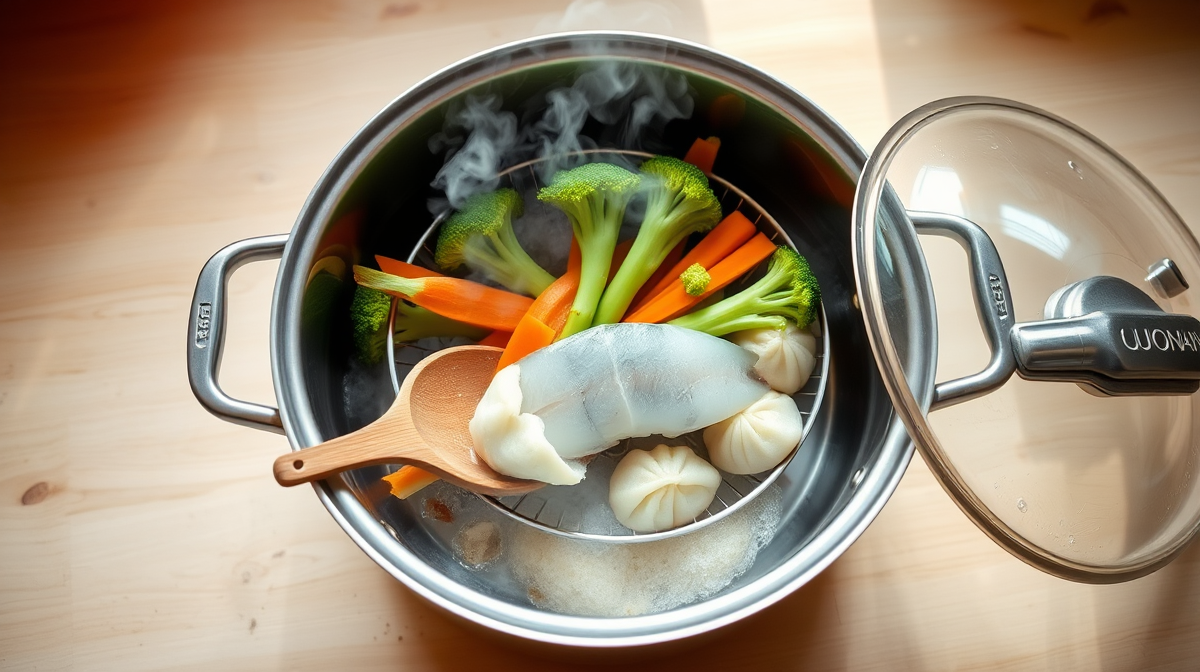
Why steam is your quiet kitchen ally
Steaming isn’t reserved for restaurants or expensive gadgets. It’s a simple method that keeps nutrients intact, prevents sticking, and means less scrubbing afterward. At home, you only need to master heat control and the items already in your pantry.
The pot you already own (and how to make it work for you)
Any deep pot with a tight-fitting lid does the job. Add a few inches of water to the bottom, bring it to a boil, then reduce to medium-low. The key is keeping the water from touching the food. If your lid has a pressure valve, crack it slightly to release excess moisture so dumplings don’t get soggy.
A wooden stick, a plate, and a colander: builds that actually work
No steamer basket? No problem. Place a wooden chopstick or three clean coins at the bottom of the pot. Rest a heatproof plate or a stainless-steel colander on top. Make sure it fits well and the lid seals tightly. For fish or dumplings, line the surface with parchment paper or cabbage leaves so nothing sticks when you remove it.
Tips for perfect results every time
- Cut vegetables into uniform pieces so they cook evenly.
- White fish takes about 6–8 minutes; thicker cuts need a minute more. Turn off the heat when it flakes slightly.
- Keep frozen dumplings frozen. Steam them directly so the wrapper holds its shape.
- Let them rest for one minute off the heat. Residual heat finishes cooking without drying them out.
Quick pantry and fridge pairings
Pair a crisp vegetable like broccoli, green beans, or carrots with a lean protein such as cod or firm tofu. Add grated ginger, a splash of soy sauce, and a drizzle of toasted sesame oil. It’s a neutral base that takes well to flavors and fits effortlessly into your weekly meal prep. Store leftovers in an airtight container and enjoy them cold in salads or warm with noodles.
- #cocina-al-vapor
- #utensilios-caseros
- #cena-rapida