
The basic principle: safety first
Thawing is not just waiting for the ice to disappear. Temperature is key: while food sits in the danger zone (between 40 °F and 140 °F / 4 °C and 60 °C), bacteria multiply rapidly. That’s why thawing on the countertop or in direct sunlight isn’t just a myth—it’s a basic home kitchen rule that protects your pantry and your health.
Practical methods for your kitchen
- Refrigerator (most reliable): Place meat, fish, or stew portions on a deep plate inside the fridge. It works evenly and preserves texture. Allow 12 to 24 hours depending on thickness. Perfect for advance meal planning and removing dinner stress.
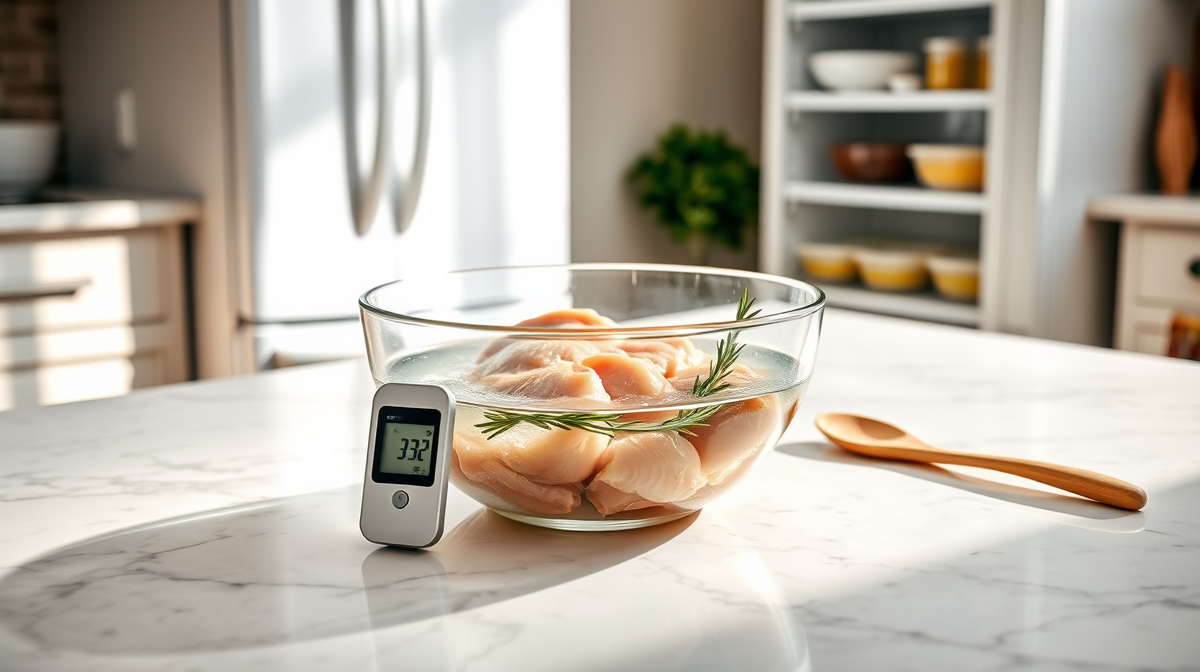
- Cold water (fast and effective): Seal the food in a heavy-duty freezer bag, submerge it in a bowl of cold water, and change the water every 30 minutes. A chicken breast or salmon fillets will thaw in 1–2 hours. Pat it completely dry with paper towels before cooking so your sauté or pan-sear works properly.
- Microwave (for true emergencies): Use the defrost setting or low power. Rotate or separate pieces every minute to prevent partial cooking. Cook immediately after, as some areas may have already reached cooking temperature during the process.
Common mistakes to avoid
- Leaving food out on the counter for hours to “save time.”
- Thawing and refreezing without cooking first (quality drops and safety risks rise).
- Using hot water: the outside cooks while the inside stays frozen, creating unsafe spots.
Fitting it into your weekly routine
Smart thawing aligns with your pantry and shopping list. When planning your grocery run, decide what you’ll freeze for Tuesday or Thursday. Store items in flat bags or stackable containers to save freezer space and speed up thawing. A simple weekly menu prevents last-minute improvisations, ensures every ingredient performs at its best, and turns thawing into an automatic step instead of a hurdle.
- #descongelar-alimentos
- #seguridad-alimentaria
- #ahorro-tiempo-cocina