
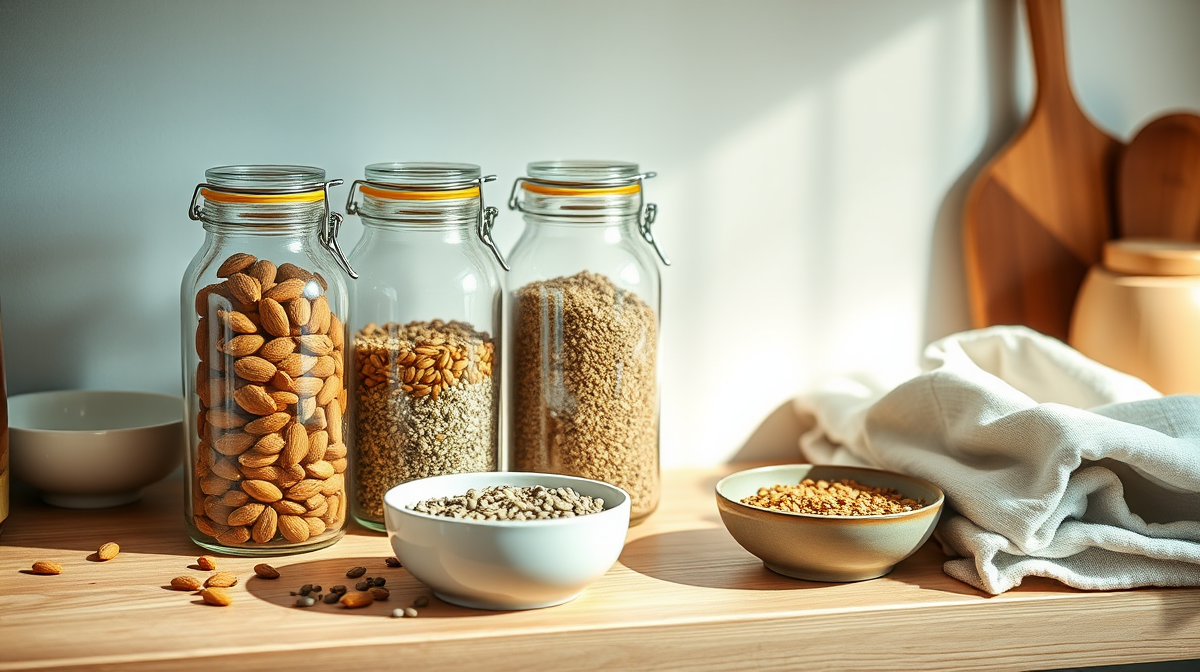
Why nuts and seeds turn rancid
Nuts and seeds are not static pantry items. They contain unsaturated natural oils that begin to oxidize when exposed to oxygen, light, and heat. This is not a strict expiration issue but a progressive chemical degradation process. When it advances, those cardboard, paint-like flavors appear, or simply a bitterness that ruins any recipe. In my daily kitchen routine, the most common mistake is buying in bulk without considering how they will be stored. A bag of almonds or a mix of flax and chia seeds can last months if three variables are respected: the container, the temperature, and rotation. There is no need to invest in expensive machinery or follow laboratory protocols. With simple adjustments in your pantry and fridge, you keep the flavor intact and avoid waste.
The right container: the first shield
Air is the main enemy of vegetable fats. Once you open a commercial package, the surface of every nut or seed is exposed. The first step I take is transferring them to an airtight container. Glass is my preferred option because it does not absorb odors, does not degrade over time, and allows you to see the contents without opening it. Jars with silicone gaskets and pressure locks work perfectly. If you prefer to keep them in bags, forget paper clips or rubber bands; they are insufficient for blocking oxygen flow. Use quality ziplock bags with double seals and manually push out the air before closing. Avoid translucent plastic containers or those that previously held strong spices, as they retain volatile compounds. It is also useful to store them in opaque containers or inside a dark drawer. Light accelerates the oxidation of oils, even if the container is closed.
Temperature and location: cold is your ally
The golden rule is simple: the colder, the slower the rancidity process. In the pantry, at room temperature (between 68 and 72 °F), nuts with higher fat content like walnuts, hazelnuts, or sesame seeds last between three and six months. Sunflower or pumpkin seeds, with less fat, can last slightly longer, but the margin shrinks if the kitchen is warm or near the stove. This is where the trick changes: after the first opening, or if you buy in large quantities, the refrigerator or freezer become your best tools, as detailed in safe freezing methods. In the fridge, they last between six and twelve months. In the freezer, they can maintain freshness for up to a year without losing texture or flavor. The practical detail often overlooked is condensation. Never put a cold container directly into a warm place without letting it adapt to room temperature. If you open a cold jar in a humid kitchen, vapor condenses inside, dampening the seeds and hardening the fat.
Rotation and date control: the FIFO system
Having a good container and the right temperature means nothing if you do not know what to use first. In my kitchen, I apply a FIFO (First In, First Out) system adapted to pantry goods, exactly as I explain in FIFO pantry rotation system. Every time I open a new package, I note the opening date on a sticky label or with a permanent marker on the side of the jar. I am not referring to the manufacturer’s expiration date, but the day I opened it. This allows me to visualize the real consumption cycle. If I have a jar of hemp seeds opened four months ago and one of walnuts opened two months ago, the hemp goes first. I also adjust my shopping: it makes more sense to buy small bags of fatty nuts that will be consumed within weeks, and reserve large jars for daily-use seeds like chia, flax, or sesame. If you notice a jar filling with fine dust or the pieces darkening slightly, it is a sign that oxidation has already advanced. At that point, use them only for high-heat cooking or discard them. Forcing stale flavors into a salad or dessert is not worth it.
Quick freshness test before using them
Before integrating a nut or seed into a recipe, I do a two-step verification. First, smell: the aroma should be sweet, toasted, or slightly earthy, depending on the product. If you detect a metallic, glue-like, or rancid smell, it is oxidized. Second, texture and taste test: bite a piece or a teaspoon of seeds. They should crunch clearly and release a clean flavor. If they crumble into dust when bitten, leave grease on your fingers, or taste bitter, it is time to renew the batch. This control has saved me more than one ruined dinner due to expired ingredients. It also forces me to be aware of my consumption pace and adjust monthly purchases instead of hoarding.
Sources
The management of lipid oxidation in foods rich in vegetable fats is widely documented by food safety agencies and nutritional research centers. Recommendations regarding cold storage, humidity control, and the use of airtight containers align with the guidelines of the Spanish Agency for Food Safety and Nutrition (AESAN) on the proper conservation of perishable and long-lasting foods. Furthermore, the principles of preventing oil degradation through exposure to oxygen, light, and temperature coincide with the healthy fat storage guidelines published by the Harvard T.H. Chan School of Public Health. For further reading on rotation systems and waste reduction in home pantries, consulting the food inventory management protocols of these institutions is recommended.
- #frutos-secos
- #conservacion-despensa
- #rotacion-almacenamiento