
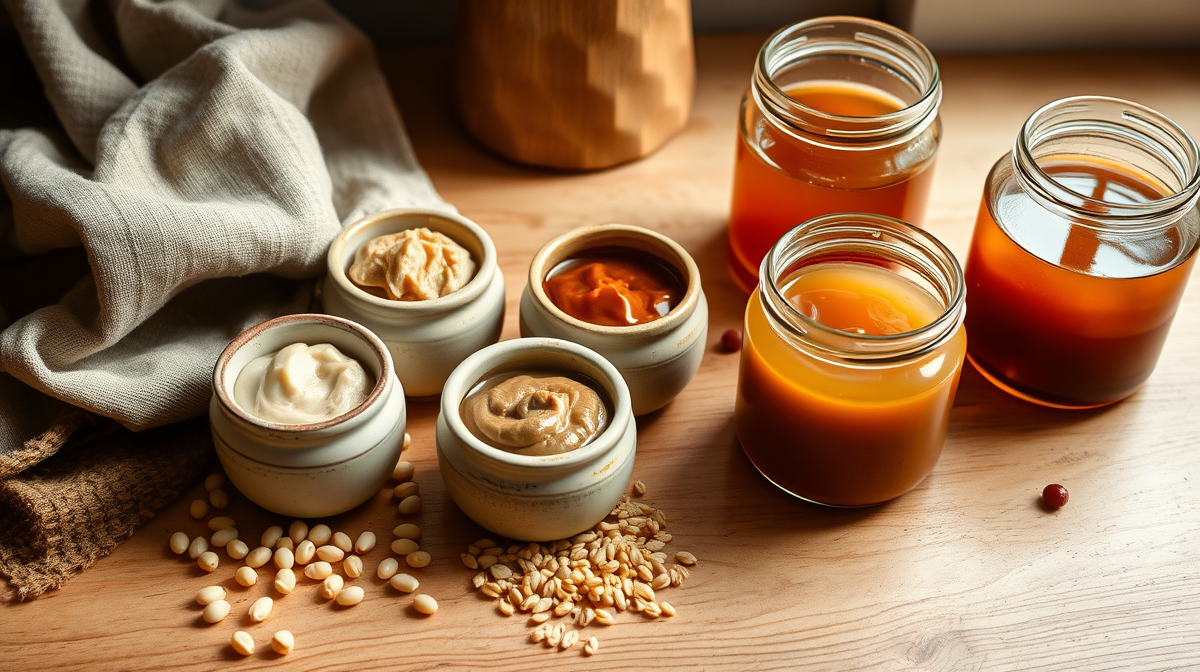
Miso is a traditional fermented paste made from soybeans, a grain (rice, barley, or wheat), and the koji mold. Through fermentation, proteins break down into amino acids like glutamic acid, releasing that deep, rounded savory note we call umami. Far from being a luxury item, it’s a practical pantry staple that helps you reduce salt while adding serious depth to simple, everyday dishes.
Miso Types and When to Use Them
Shelf variety can be confusing, but the difference comes down to fermentation time and base grain:
- White Miso (Shiro): Short fermentation (weeks to a few months). Mild, slightly sweet, and salty. Perfect for light vinaigrettes, clear onion soups, or marinating delicate fish.
- Yellow/Orange Miso: Medium fermentation. Offers a versatile balance between sweetness and salt. Use it as a base for quick stews, vegetable braises, or to add body to cream-free soups.
- Red Miso (Aka): Long fermentation (months to years). Intense, robust, and saltier. Ideal for bone broths, ragù, grilled meats, or slow-cooked legumes.
- Hatcho Miso: Extremely long fermentation, dark color, and granular texture. Use carefully in concentrated broths or to partially replace meat stock in vegetable soups.
How to Integrate Miso into Western Broths and Dressings
The most common mistake is boiling it. Excessive heat dulls its aromas and kills its live cultures. Follow this reliable technique:
- Broths and Soups: Bring your base broth to a boil, then remove it from the heat. Wait two minutes for the temperature to drop. Whisk the miso with a ladle of the hot broth until fully dissolved, then stir it back into the pot.
- Dressings and Vinaigrettes: Replace salt and garlic powder with one tablespoon of miso whisked into apple cider vinegar or lemon juice. Add extra virgin olive oil and a touch of mustard or honey to emulsify. Works beautifully on bitter greens, cabbage slaws, or as a base for creamy sauces.
- Marinades and Glazes: Mix red miso with a splash of soy sauce, fresh grated ginger, and sesame oil. Brush it on chicken, beef, or tofu. Natural enzymes tenderize the protein, while the salt helps retain moisture during cooking.
Pantry and Cooking Tips
- Choose refrigerated miso and verify a short ingredient list: soybeans, grain, koji, and salt. Avoid pasteurized versions loaded with unnecessary additives.
- Always store it in the fridge. Once opened, it lasts for months if you use a clean, dry spoon to prevent mold.
- Reduce the salt in your original recipe. Miso naturally contains sodium; adjust to taste and sample before adding more.
- Get used to using it in small amounts. Half a teaspoon in broths or dressings is usually enough to activate umami without overwhelming the palate.
- #miso
- #umami
- #fermentacion
- #aderezos
- #cocina-casera