
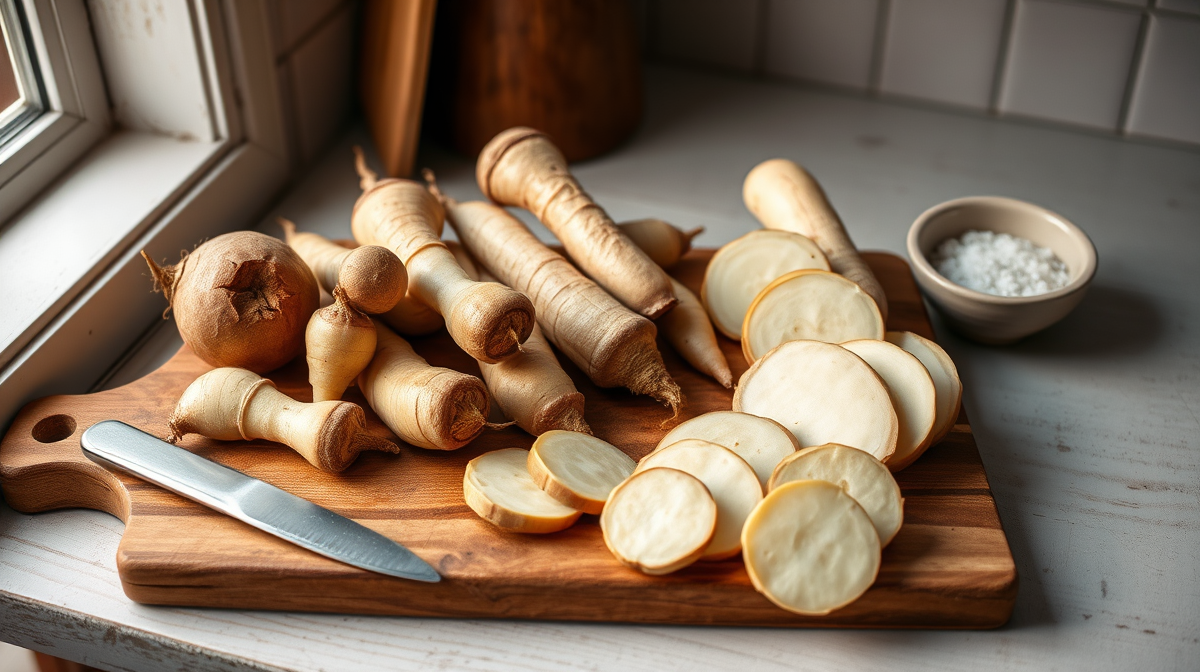
Why bring turnips and parsnips back to your kitchen
A few years ago, turnips and parsnips were the backbone of the winter pantry. Today, many of us leave them at the bottom of our shopping bags or mistake them for potatoes. The truth is that these two roots offer a complete nutritional profile: they provide soluble and insoluble fiber, potassium, vitamin C, and phenolic compounds that support digestion. They are not just an economical filler; they are a practical tool to balance your plate without piling on empty calories. If you want a realistic way to bring more seasonal vegetables into your daily routine, starting with these two roots is a straightforward step that requires zero special equipment or advanced techniques.
Peeling and cutting: the time-saving trick
The biggest barrier to using forgotten roots is preparation. You do not need a chef’s toolkit to get the most out of them. With a straight-blade peeler and a medium kitchen knife, the work takes minutes.
- Turnip: peel only the outer skin. The flesh is firm but softens quickly during cooking. Cut it into two-centimeter cubes so the heat distributes evenly.
- Parsnip: its skin is thinner but often holds soil in the crevices. Rinse under cold water and use a small kitchen brush if needed. Like the turnip, slicing or julienning allows flavors to penetrate better in stews and roasts. A practical tip from Carmen: do not discard the green tops if they come fresh. In the case of turnips, the leaves are edible and can be used like spinach. Store them in a container with a little water or wrapped in a damp cloth to keep them fresh for two extra days in the fridge.
Practical cooking for your week
These roots handle heat well and absorb seasonings without fighting back. My daily approach relies on three methods that do not require standing over the stove:
- Sheet pan roast: toss the pieces with a drizzle of olive oil, coarse salt, and a pinch of rosemary or thyme. Spread on a baking sheet and roast at 400°F (200°C) for 25-30 minutes. The result is a contrast between caramelized edges and a creamy center. Perfect for pairing with simple proteins.
- One-pot stew: add the raw pieces to your braise during the last stage of cooking. The parsnip releases a natural sweetness that balances tomato acidity, while the turnip absorbs the juices without falling apart.
- Quick mash: boil them in lightly salted water until a knife passes through without resistance. Drain well and blend with a little butter or olive oil. It is a neutral base you can use to add body to lasagnas, fillings, or even as a light side dish. If you want to structure these cooks into your routine, I leave you a guide on how to organize your weekly meals without losing control of your time.
Storage tips to keep them fresh
The secret to longer shelf life is not immediate freezing, but managing air and humidity. Store turnips and parsnips in the crisper drawer, inside a cloth or paper bag, and never in sealed plastic. If already peeled and cut, dry them thoroughly with paper towels, place them in an airtight jar, and use within 48 hours. To extend their life, you can blanch them briefly (2 minutes in boiling water, then plunge into ice water) and freeze them by portion. This prevents them from becoming fibrous and keeps their texture intact for soups and stews later on. If you need more details on cold storage and food safety, this article on freezing food correctly gives practical tips that apply directly to roots and tubers.
Sources
- Agencia Española de Seguridad Alimentaria y Nutrición (AESAN). Recommendations on seasonal vegetable and fruit consumption.
- World Health Organization (WHO). Guidelines on dietary fiber intake and its impact on digestive health.
- Harvard T.H. Chan School of Public Health. The Nutrition Source: Root vegetables and dietary fiber.
- #raíces
- #cocina-práctica
- #verdura-invernal