
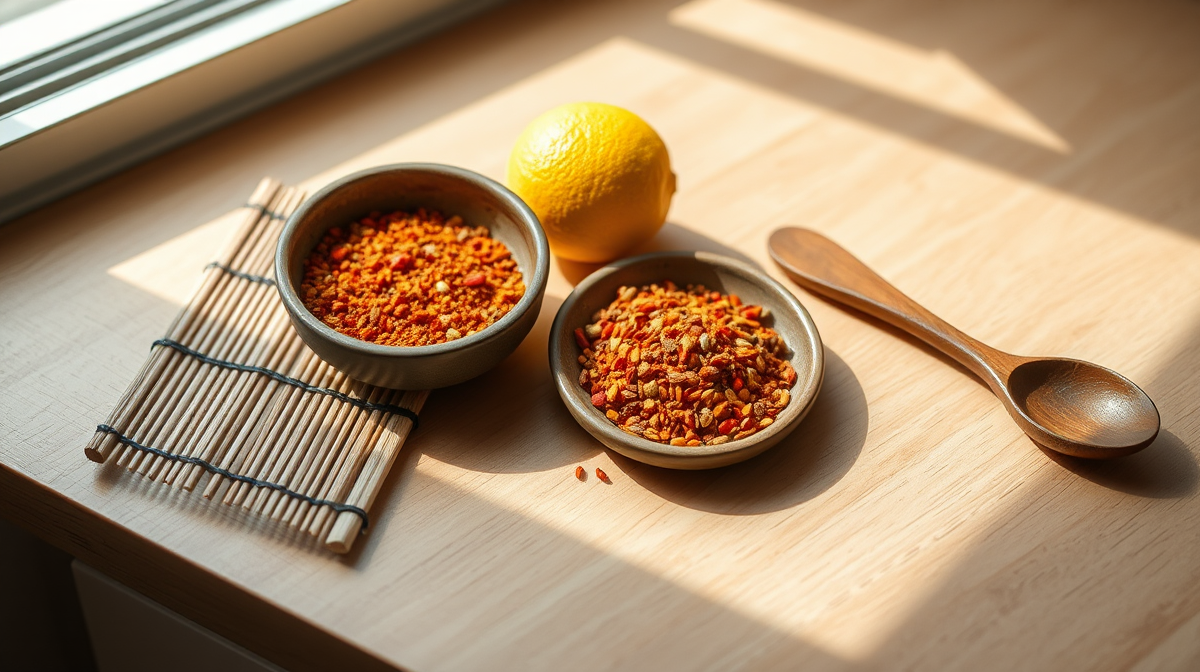
Why these two ingredients deserve a permanent spot in your pantry
Home cooking doesn’t need complicated exotic items; it thrives on pantry staples that multiply flavor with minimal effort. Shichimi togarashi and yuzu are two Japanese essentials that, thanks to their versatility, should sit right next to your salt and pepper. They won’t complicate your meals—they’ll deepen them.
Shichimi Togarashi: Balanced Heat and Aroma
Unlike standard chili powder, shichimi is a seven-spice blend: ground red chili, Sichuan peppercorn, toasted sesame seeds, dried orange peel, poppy seeds, nori, and ginger. Its power lies in balance. It warms the palate gradually while adding citrus, nutty, and mild umami notes. Treat it like an Asian all-purpose seasoning. Sprinkle it over steamed rice, stir a teaspoon into olive oil for garlic bread, or dust it over roasted potatoes and scrambled eggs. Keep a jar on your counter alongside your regular salts and peppers.
Yuzu: The Bright Citrus Finish
Yuzu is a Japanese citrus hybrid with a complex aroma blending lemon, mandarin, and yuzu blossom. Fresh fruit is hard to find outside Asia, but that’s no reason to skip it. A quality bottled yuzu juice or concentrate works perfectly. Use it like a refined lemon, but only at the right moment. Add a tablespoon to winter salad dressings, drizzle it over poultry or fish before roasting, or whisk a splash with soy sauce and honey for quick glazes. Avoid high heat; the delicate acids and citrus oils will evaporate. Add it at the end, right before serving.
How to weave them into your weekly routine
You don’t need new recipes to start. Follow this simple rule: shichimi for hot, roasted, or fried dishes; yuzu for raw, chilled, or lightly warmed plates. Mix a base vinaigrette with soy sauce, yuzu, and toasted sesame oil on Sunday. In two minutes, you’ll have dressings ready for the week. Turn these two ingredients into your new home-cooking flavor multipliers.
- Sprinkle shichimi over soups, rice bowls, or roasted vegetables right before serving.
- Drizzle yuzu into salad dressings, yogurt dips, or berry desserts after cooling.
- Store both in airtight jars away from direct heat to preserve their volatile oils.
- #shichimi-togarashi
- #yuzu
- #despensa-asiatica