
Why Shiitake Is Your Everyday Umami Ally
For years, I’ve been searching for that deep, savory note that turns a simple home-cooked meal from “fine” to “I want seconds.” Dried shiitake is one of the most underrated pantry staples for exactly that. It’s not just a mushroom; it’s a natural concentration of glutamate, the same amino acid that delivers that satisfying, rounded flavor. Unlike fresh mushrooms, dried shiitake develops smoky, earthy, and slightly sweet notes when rehydrated. My daily trick isn’t about making things complicated: I use it as a flavor base in broths, quick sautés, and everyday stews. If you’ve been avoiding it because of soggy textures or long prep times, this guide will change your routine.
Correct Hydration: No More Textural Mistakes
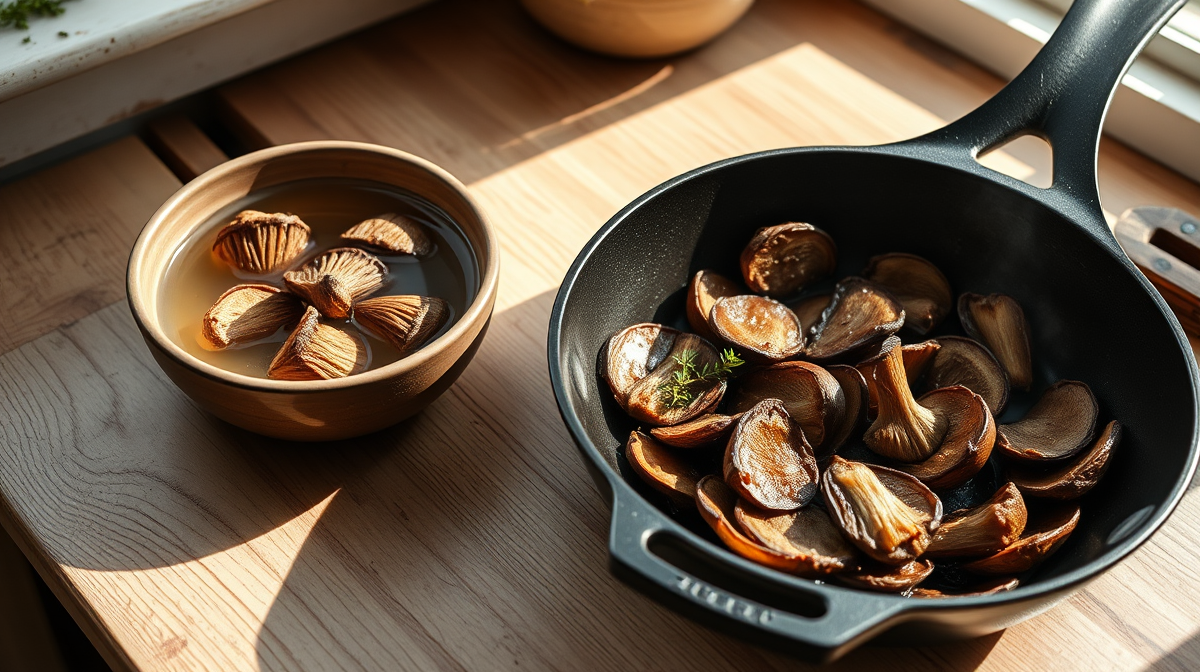
The first step is where most people go wrong at home. Many toss the soaking water or use water that’s too cold. Here’s the protocol I follow every week:
- Use hot water (not boiling) and soak the mushrooms for 20–30 minutes. If you’re short on time, 10 minutes with very hot water works, but the texture will stay firmer.
- Never throw away the soaking liquid. Strain it through a fine sieve or let it sit for 2 minutes so any sediment settles. That broth is liquid gold: pour it into your pot along with the mushrooms.
- Rinse them gently under running water only if you see visible grit. Shiitake absorbs water like a sponge; over-washing drains their flavor and makes them swell too much.
- Trim the stems (they’re usually too woody) and save them for broths. The caps are what bring meatiness and umami to your dish.
This method guarantees mushrooms with body, without excess moisture that ruins the sauté. If you want to explore more Asian pantry basics, check out our guide to Asian ingredients.
High-Heat Sautéing: The Flavor Secret
Once rehydrated, the biggest mistake is putting them in a cold pan or using low heat. Umami activates with dry heat and movement. Follow these steps:
- Drain the mushrooms thoroughly. If they’re wet, they’ll steam instead of brown.
- Heat the pan over medium-high heat before adding oil. A neutral oil or light olive oil works best so you don’t mask their natural flavor.
- Don’t overcrowd the pan. If you pile the mushrooms in, they release water and steam. Cook in batches if needed.
- Leave them undisturbed for 2 minutes until you hear a crisp sizzle. Flip only when they’re lightly browned underneath.
- Finish with a splash of soy sauce or rice vinegar to balance the intensity. Acid cuts through fat and highlights the glutamate.
This process transforms rehydrated mushrooms into a flavorful ingredient, ready to integrate into any dish. If you’re looking for other pantry flavor foundations, here are tips on essential spices.
Practical Pairings for Your Daily Kitchen
Shiitake doesn’t demand complicated recipes. It blends into what you already cook, elevating the result without adding extra steps:
- Rice and grains: Add rehydrated shiitake and their soaking broth to rice or quinoa. The liquid absorbs the umami, leaving the grains moist without needing chicken stock.
- Quick vegetable stir-fries: Pair them with broccoli, julienned carrots, and garlic. The texture contrast (crunchy-earthy) works perfectly with a touch of toasted sesame.
- Fast proteins: Chicken, pork, or firm tofu benefit greatly from their flavor. Marinate for 10 minutes with a little shiitake broth and soy sauce before sautéing.
- Soups and noodles: Replace part of your broth with strained soaking water. The depth of flavor increases without adding extra salt.
- Scrambled eggs or frittatas: Slice the mushrooms thinly and mix them into the eggs before cooking. The umami fuses with the egg protein, creating a quick breakfast or dinner packed with savory depth.
The key is to treat shiitake as a flavor enhancer, not the absolute star. With these adjustments, your everyday cooking gains layers of taste without the fuss.
Sources
- Spanish Agency for Food Safety and Nutrition (AESAN). Information on the consumption and safety of edible mushrooms.
- Harvard T.H. Chan School of Public Health. Nutrition Source: Mushrooms and health benefits.
- #shiitake
- #umami
- #setas
- #cocina-casera
- #sabor-fondo