
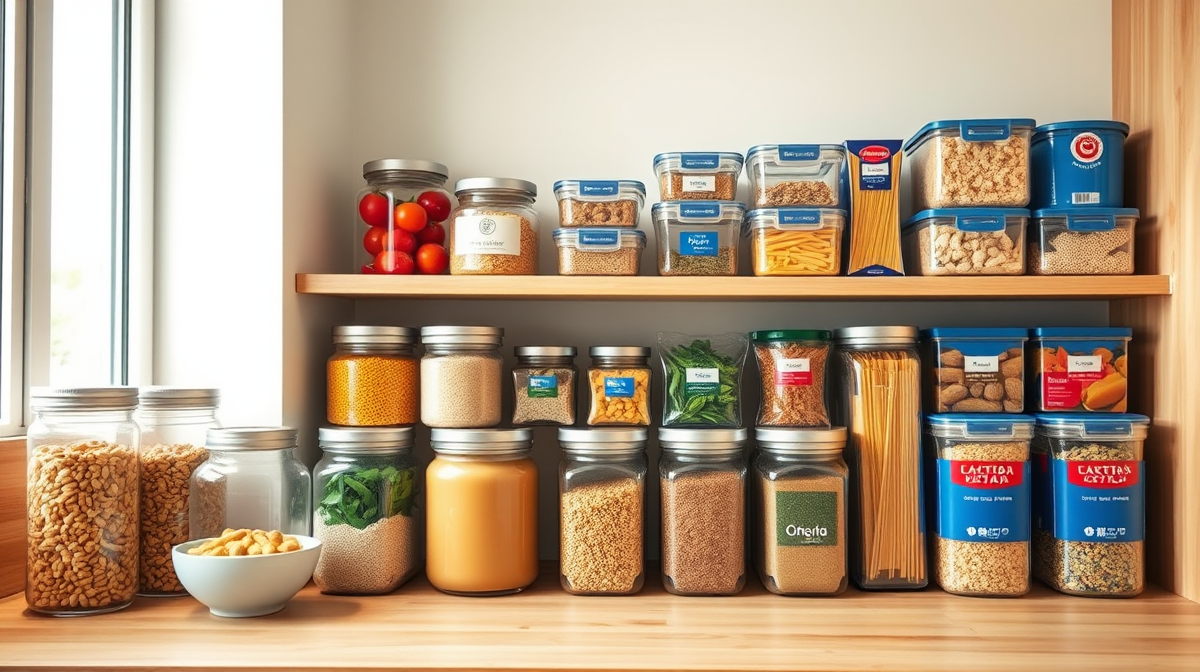
The real problem with a disorganized pantry
We live in kitchens that seem to work perfectly until we open the dry food cupboard. Spice jars with faded labels, crushed cereal boxes tucked in a corner, cans of tomatoes waiting for their turn, and that bag of dried beans we forgot about three months ago. The result isn’t just clutter: it’s wasted money and unnecessary stress. According to data from the World Health Organization, a significant portion of the food we buy ends up in the bin because its best-before date passed without anyone noticing. It’s not about being perfect; it’s about creating a flow that helps you see what you already have before buying the same thing twice. The key is understanding that visual clutter triggers automatic decisions: if you don’t see it, you don’t use it, and if you don’t use it, you throw it away. Calculate that an average household can lose between 60 and 80 euros annually just on expired dry goods. That money could go toward fresh ingredients or tools that actually improve your daily routine.
How to set up your FIFO system in one afternoon
FIFO stands for First In, First Out. It’s a logistics principle that, when applied at home, becomes a visual and tangible method. To implement it without spending money on expensive organizers, you need three things: masking tape, a permanent marker, and a drawer or tray that serves as a transition zone. Start by completely emptying one shelf or cupboard. Clean with water and vinegar, let it dry, and before putting anything back, sort by category: cereals, pastas, dried beans, canned goods, jars, and packets. Place the oldest products in the front and the new ones in the back. If you use transparent jars, note the opening date with tape and marker. The key lies in the transition zone: a drawer or tray where only items nearing expiration or already opened go. This trains your eyes to grab what needs to leave first. Dedicate exactly one hour to this process. Don’t stop to organize what you haven’t used in six months; donate or gift it right then. Empty space is your ally for maintaining flow.
Rotation tricks that don’t require gadgets
The system only works if it’s visible and accessible. Avoid hiding everything in opaque boxes or too-high shelves. Use the two-row technique: a back row for reserves and a front row for immediate consumption. When you buy a new product, place it behind the equivalent you already have. If you use glass jars, add a label with the purchase date and the best-before date. For bags of dried beans and cereals, cut the top open and pour the contents into a clean jar, noting the date on the lid with masking tape. Another foolproof trick is creating an “emergency drawer” at the bottom of the kitchen counter or on the worktop, where only items that must be consumed within the next seven days go. This way, when you prepare your weekly list, your eyes naturally skip over what’s about to expire. Use a fridge magnet with a small whiteboard to note which jar has been in the pantry for over two months and needs priority. Constant visibility eliminates the need for memory.
How to keep the system without burning out
Smart rotation isn’t a weekend project; it’s a five-minute habit. Dedicate one day a week, preferably the same day, to check the transition zone and the front row. If something is near its date, note it on your shopping list to use it first or freeze it if viable. Check out lista-compra-inteligente to integrate this check into your routine without adding extra tasks. Additionally, link rotation with preservation: if you know you won’t use a sauce jar or pasta pack in two weeks, freeze or donate it before it expires. Read congelar-alimentos-bien to learn how to extend the shelf life of dry and semi-dry products without losing texture. Ultimately, the goal isn’t perfection, but creating a natural flow where old items are consumed before new ones arrive, saving money and reducing daily kitchen stress. Weekly discipline becomes automation in three months. Stop buying what you already have and start spending what you already bought.
Sources
- World Health Organization (WHO). Guidelines on safe food handling and reduction of household food waste.
- Agencia Española de Seguridad Alimentaria y Nutrición (AESAN). Home food conservation and safety guidelines.
- #FIFO
- #despensa
- #reducir-desperdicio