
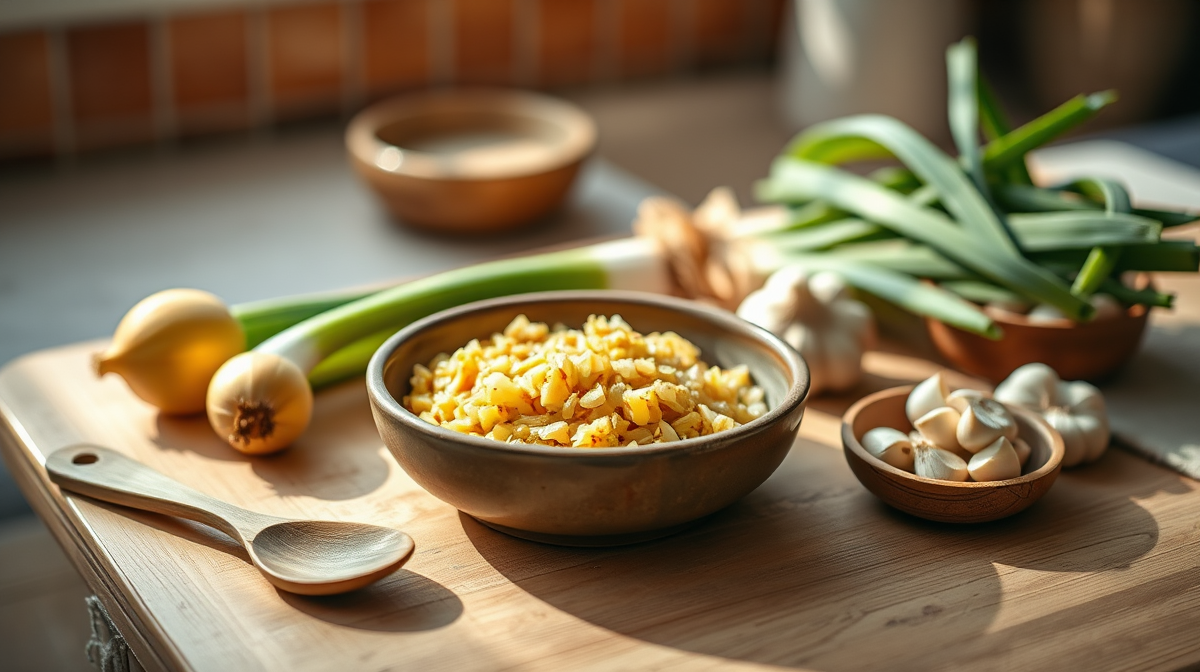
Why this sofrito is your new base
I have spent years looking for that mixture that saves me time without sacrificing flavor. The answer is not in industrial jars or stock cubes: it is a leek, onion and garlic base. It is the invisible skeleton of stews, sauces, rice dishes and even warm salads. The onion provides natural sweetness from its fructans, the leek adds body and a soft herbal note, and the garlic closes the profile with its character. Together, they create an aromatic base that elevates any dish without needing extra salt. If you still think sautéing is a slow process prone to burning, this article is for you. I have adjusted my daily kitchen routine around this base, and now I prepare it in 20 minutes while the family gets dinner ready. In summer, when the heat does not invite turning on the stove, I use it cold in dressings or warm over fresh grain bowls. If you are interested in how to fit it into your routine, I leave you a review of my system to organize weekly meals without stress.
Proportions and adjustments by use
My base proportion is fixed to avoid mistakes: 2 medium onions, 1 large leek and 4 garlic cloves for every 3 tablespoons of extra virgin olive oil. If you are going to use it for a tomato sauce, reduce the garlic to 2 cloves and add a touch of paprika at the end. For soups or broths, double the leek and remove the garlic during the first half of cooking for a smoother profile. In summer, I prepare it finer and let it cool quickly in a glass container; this preserves the pale green color and keeps the aroma vibrant. Never cook it past 25 minutes total; after that time, the sugars caramelize too much and lose freshness.
The leek trick: cleaning and cutting
Leek is wonderful but treacherous if not cleaned well. Sand hides between the layers and can ruin the sofrito. My method is simple: cut the white and green parts separately. With the white, make a V-shaped cut lengthwise, open it under running tap water and rub gently with your fingers. The water takes everything away. Once clean, slice it into thin rounds or brunoise depending on what you need. The onion, on the other hand, is peeled and cut with calm. Garlic is the last to hit the pan; if you put it at the beginning, it turns bitter. Cutting it into thin slices or mashing it with salt helps release its aroma without burning before the onion softens. To prevent the garlic from oxidizing and losing potency, always add it at the end of the vegetable cooking and stir vigorously during the first minute.
Sautéing without burning: temperature and order
The number one mistake is turning up the heat. The sofrito must be cooked over medium-low heat, with patience. Start with a splash of extra virgin olive oil in a wide pan. Add the onion and leek first. Stir every two minutes. After about 10 minutes, the vegetables will be translucent and soft. This is where the garlic comes in: add it at the end of that time and cook for another 3-4 minutes. The goal is not to brown until it crackles, but to confit until the raw smell disappears and the edges are slightly caramelized. If you see it drying out, add a tablespoon of water or broth. The steam helps soften the fibers without excessive frying. This technique preserves beneficial sulfur compounds and avoids bitter flavors. Try adding a pinch of dried oregano at minute 12; the gentle heat activates it without burning. If you want to dive deeper into how to use umami and acidity to reduce salt without losing flavor, I recommend reading this post.
How to store it and make the most of it
Once ready, let it cool completely before storing. I keep it in airtight glass jars in the fridge for up to 5 days, or in individual portions in the freezer for up to 3 months. Thawing food safely and quickly is key to not losing quality, and this sofrito adapts perfectly to any safe method. To use it: sauté lentils, base for homemade pizzas, mix with crushed tomato for a 10-minute pasta sauce, or use it as a base for vegetable soups. I also add it to bread dough for depth. The key is not to treat it as a seasoning, but as a structural ingredient. One tablespoon changes the profile of a stew; two transform a vegetable dish. On hot days, I use it cold over fresh cheeses or mixed with yogurt to spread on toast. If you are looking for more ideas to make the most of aromatic bases without complicating things, take a look at how to integrate Asian ingredients into your daily cooking.
Sources
- AESAN. (2022). Guide to safe conservation and handling of vegetables in the home. Spanish Agency for Food Safety and Nutrition.
- World Health Organization. (2020). Healthy diet: Fruits and vegetables. WHO guidelines on diet and chronic disease prevention.
- #sofrito
- #base-aromatica
- #cocina-diaria