
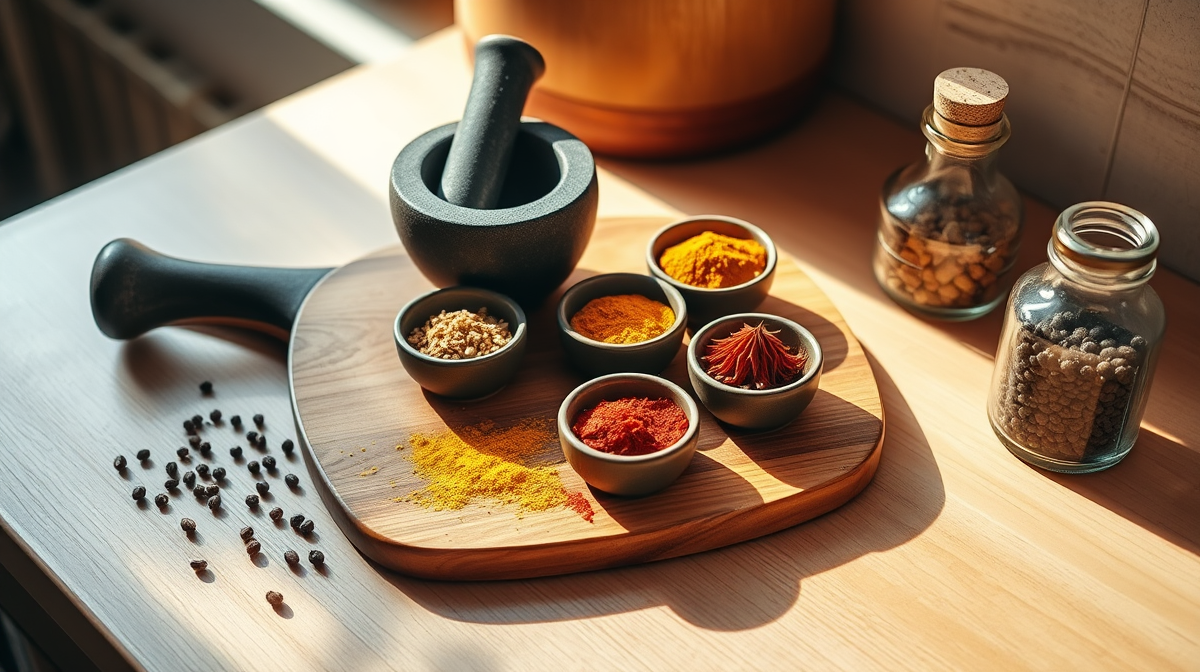
The secret of everyday spices
Cooking every day doesn’t mean resigning yourself to bland meals. In my kitchen, spices aren’t a luxury for special occasions; they’re the most honest tool I have to lift the flavor of basic ingredients. A chicken breast, a plate of lentils, or roasted potatoes can feel flat if we only rely on salt. The trick isn’t buying expensive jars or hunting down exotic ingredients you’ll never use. It’s about mastering four spices you already have and knowing exactly when and how to use them so every bite has depth. If you want to dive deeper into balancing your dishes, check out my guide on adjusting acidity, sweetness, and salt without over-relying on the salt shaker.
Activating the aroma: toasting and blooming
The difference between a spice that smells like dusty powder and one that transforms a stew is activation. Ground spices lose their essential oils over time and with light exposure. To recover their strength, I use two fail-safe techniques every week. The first is dry toasting: heat a skillet over medium-low heat, add whole seeds (cumin, mustard, cardamom), and stir constantly for two to three minutes until they start to crackle and release a toasted aroma. Remove them before they burn, because bitterness appears in seconds. The second technique is blooming in fat. Paprika, turmeric, and curry are fat-soluble. If you toss them directly into boiling water, they sit on the surface and never integrate. The right move is to mix them with a drizzle of olive oil or warm water before adding them to the pan. This releases the pigments and aromatic compounds, giving the dish body without needing extra salt or fat.
4 spices that change the game in simple dishes
You don’t need an arsenal. With these four, you cover 90% of your weekly meals, and each has an exact moment to enter the pot.
Ground cumin: the silent partner of legumes and eggs. Add it to the sofrito when the onion and garlic are translucent, but before pouring in the broth. The warm fat activates its terpene, cuminal, which brings that earthy, slightly bitter note that cuts through the heaviness of soup dishes. Two pinches per serving are enough.
Sweet and hot paprika: perfect for potatoes, green beans, or oven-roasted chicken. The most common mistake is adding it at the end of cooking. If you do, it tastes raw and burns the throat. You must incorporate it when the oil is hot but not smoking, stirring for thirty seconds before adding any liquid. Hot paprika should be used sparingly: a pinch elevates the dish, two ruin it.
Turmeric powder: don’t use it as a colorant. Use it to round out flavors in rice, vegetable broths, or scrambles. The key is always pairing it with freshly cracked black pepper. The piperine in the pepper multiplies curcumin absorption and prevents the flavor from feeling flat. One teaspoon per portion, integrated into the sofrito, is enough.
Green cardamom pods: sounds like a dessert ingredient, but in savory cooking, it’s a freshness multiplier. Crack two pods and drop the black seeds into white rice, roasted chicken, or even the water when boiling potatoes. Remove them before serving. Its citrusy and eucalyptus profile cleanses the palate and makes basic ingredients feel lighter.
How to store them so they don’t lose strength
Spices are like fresh bread: they lose quality fast if treated poorly. The number one enemy is moisture. Never store them near the sink or on the counter where steam from the pot penetrates them. Use glass jars with silicone gaskets, place them in a dark drawer, or in a pantry far from the stove. If you buy ground spices, ensure the container is opaque and close it immediately after every use. Whole seeds last up to a year; ground ones, six months. To check if a spice is still alive, rub a little between your fingers: if it doesn’t release aroma instantly, it’s time to replace it. Apply the FIFO system: older jars in front, newer ones in back. If you want to dive deeper into structuring your pantry for better yield, I recommend my article on essential spices for a functional pantry.
Sources
- Spanish Agency for Food Safety and Nutrition (AESAN). Guidelines on safe storage of spices and condiments to prevent cross-contamination and quality loss.
- Harvard T.H. Chan School of Public Health. Research on curcumin bioavailability and the role of piperine in enhancing absorption.
- #especias
- #sabores-caseros
- #cocina-practica