
Tupperware that lasts all week: choosing seals and materials
Hi, I’m Carmen. If there is one thing that ruins my meal prep mood, it’s opening a container on Wednesday afternoon to find a soggy mess or a sauce leak in my bag.
We talk a lot about what to cook (like in my meal-prep-sunday guide), but today we need to talk about the vessel. Because prepping food is useless if it dries out, gets mushy, or smells like yesterday’s curry by mid-week.
The secret isn’t the material, it’s the gasket
Many people think a container is good because it’s thick glass. But freshness depends 90% on the silicone gasket (the rubber seal).
For a tupper to last 5 days without losing quality, the gasket must be thick and flexible. Thin gaskets deform with heat or cold and let air in. Air is the enemy: it oxidizes food and dries out textures. When you check your current containers, press the lid: if you don’t feel firm, uniform resistance when closing, the seal isn’t airtight. Look for containers with food-grade silicone gaskets that are visible and easy to remove for cleaning.
Pressure locks vs. snap lids: which one wins?
There is a real battle in daily kitchen organization:
- Snap lids (Pestañas): The ones that click on the sides. They are fast but tend to loosen if the container is full to the brim or moved around in a bag. Good for dry food or soups you won’t transport far.
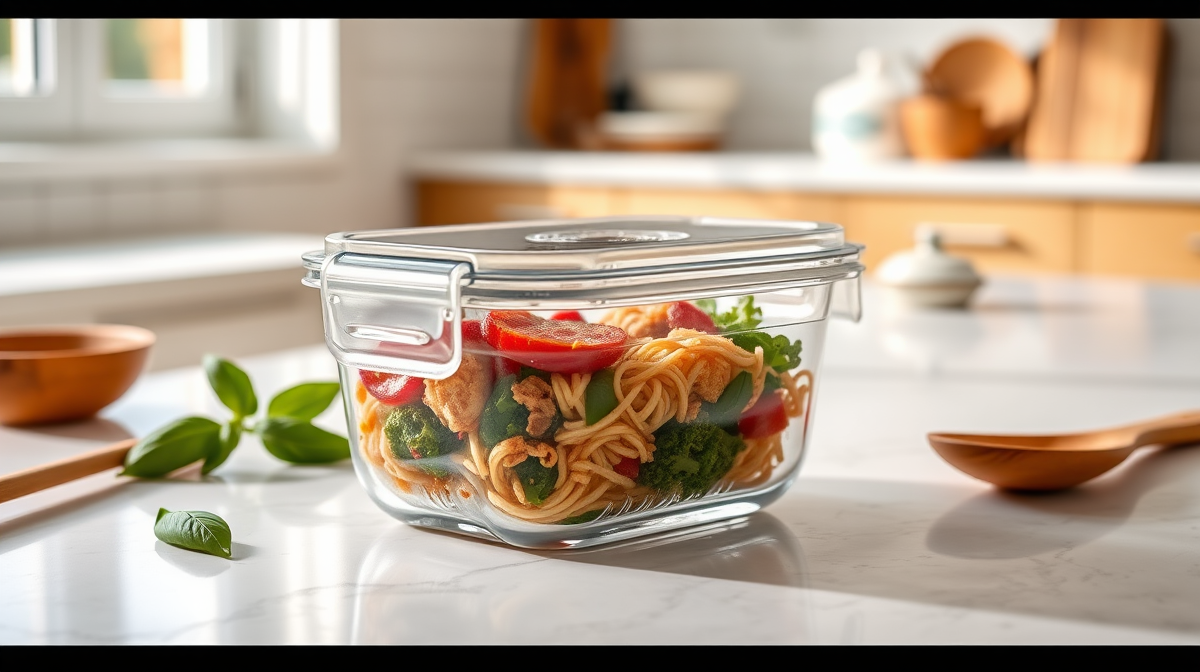
- Pressure locks (Clip locks): These have two or four side latches that lock with an audible click. These are the ones that last all week and survive any transport. They create a partial vacuum as they cool, which preserves flavor better.
My advice: For work or school meals, forget simple snap lids. Invest in pressure locks with a perimeter silicone gasket. They prevent leaks and keep internal humidity controlled.
Moisture control hacks inside the container
Sometimes the tupper is perfect, but the food fails. The problem is usually condensation.
- Cool before sealing: Never put hot food in a sealed tupper. Steam condenses on the lid and drips back onto the food, making fried items soggy or vegetables rot faster. Let it reach room temperature (max 1 hour) before closing.
- The paper barrier: For salads or leafy greens, place a sheet of kitchen paper at the bottom and another on top of the vegetables before closing. It absorbs excess moisture without drying out the food.
- Separate sauces: If your meal has sauce, store it in a small individual container (like spice jars) and add it right before eating. Direct contact with sauce for 5 days irreversibly softens everything.
Cleaning and maintenance: keep them smelling fresh
An old tupper smells because fat has adhered to the micro-texture of the plastic or the gasket.
- The gasket is the focus: Every month, remove the silicone gasket and soak it in hot water and baking soda for an hour. This is where odors accumulate.
- Avoid aggressive microwaving: Even if they are microwave-safe, plastic lids with gaskets suffer a lot in the microwave. Heat food without the lid (or with the gasket loose) and only put the lid on for transport. This extends the life of the seal.
Top 5 tupperware picks for weekly prep
If you need to renew your stock, look for these specific profiles to survive the week:
- [AMAZON: Rectangular glass tupperware with pressure lids]
- Why: Glass doesn’t stain or absorb odors (ideal for tomato and curry). The rectangular shape fits better in the fridge.
- [AMAZON: Round containers with thick silicone gaskets]
- Why: Perfect for salads and stews. The round shape prevents food from sticking in corners and makes washing easier.
- [AMAZON: Collapsible silicone tupperware for freezer]
- Why: Saves space in the fridge when empty and withstands sharp temperature changes without breaking.
- [AMAZON: Mini tupperware with airtight closure for sauces]
- Why: Small, lightweight, and secure. Ideal for carrying dressings or individual snacks without leak risk.
- [AMAZON: Set of tupperware with separate compartments]
- Why: Useful for keeping moist ingredients (like avocado or tomato) separate from rice or protein, preventing flavor and texture mixing.
Sources
- WHO (World Health Organization): Guidelines on reducing food waste through proper storage.
- Harvard T.H. Chan School of Public Health: Research on food safety and material contact.
If you want to dive deeper into avoiding food waste, check out my article on reducing-waste-in-the-kitchen.
- #tupperware
- #almacenamiento-alimentos
- #utensilios-cocina
- #meal-prep