
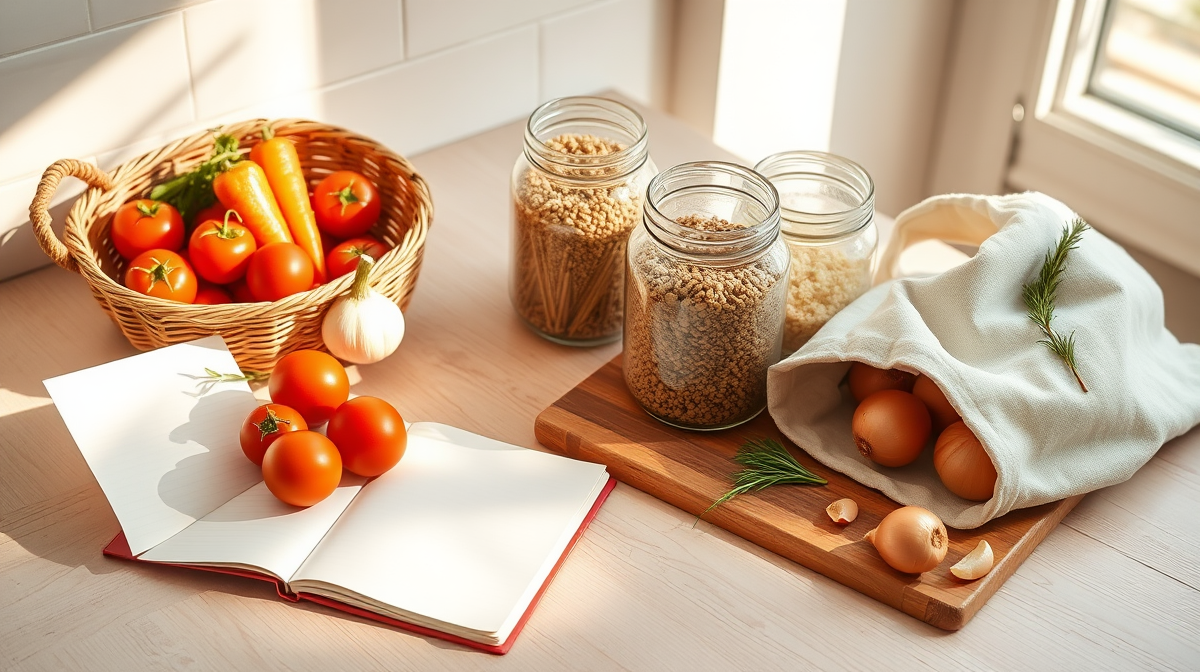
Start With Your Pantry
Before opening your shopping cart, open your cupboard. Take stock of what you already have: canned goods, grains, spices, frozen items, and those forgotten jars at the back of the fridge. This quick inventory prevents duplicate purchases and gives you a reliable foundation. Don’t forget to note running-low condiments, because good home cooking depends just as much on quality staples as on fresh produce. Keep a running tally of what you actually use before adding it to the cart.
Match Meals and Pantry Staples
Pick three or four dinners and two main lunches for the week. You don’t need to reinvent the wheel daily. Look for recipes that share ingredients to minimize waste. If a recipe calls for half a can of crushed tomatoes, plan a sauce or stew that uses the rest. Always leave room for improvisation by turning leftovers into frittatas, soups, or fried rice the next day. Build your plan around what’s already in your kitchen, not just what looks good online.
Group by Store Sections
Translate your menu into a list organized by supermarket zones. Group dairy, proteins, fresh vegetables, pantry staples, and cleaning supplies together. This saves time, keeps impulse buys in check, and makes the trip feel like a quick errand rather than a marathon. Always add a “fresh picks” line for seasonal fruit, herbs, or bakery items to keep meals bright and affordable. Walking the store in a logical order also keeps perishables fresh longer.
Review and Adjust
At the end, check that every item has a clear place in your plan. If something feels risky, skip it or swap it for something more versatile. Save the list on your phone or a shared family note so anyone can add missing items throughout the week. With this routine, your home kitchen runs smoother, your budget stays calm, and cooking becomes a habit instead of a chore. Consistency beats perfection every time.
- #planificacion
- #lista-compra
- #cocina-casera