
Why Noise and Odors Ruin Your Storage System
If you’ve ever opened the fridge and found a container smelling intensely of garlic, or struggled with lids clinking like tiny bells every time you stack them, you’re not alone. In my daily kitchen routine, these two factors are what truly determine whether a storage system actually works or ends up forgotten in a drawer. Storing leftovers, cooked legumes, or weekly ingredients isn’t just about space; it’s about habits. A container that transfers odors contaminates everything else around it. One that constantly clinks creates mental friction: eventually, we stop using it and go back to single-use plastic or daily dishes. As a mother who cooks every day, I’ve learned that the key isn’t buying the most expensive option, but understanding how materials behave under heat, acids, and daily friction.
Glass vs. Plastic: The Everyday Reality
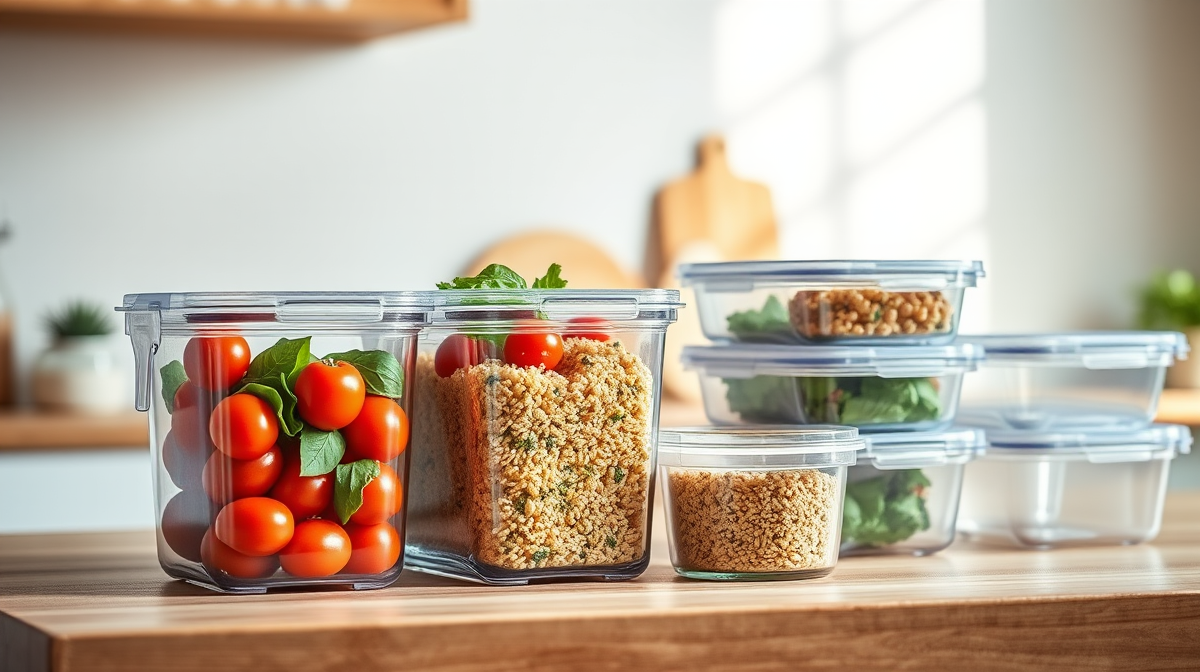
Borosilicate glass and food-grade plastic (polypropylene or Tritan) are the two main players. Glass doesn’t absorb colors or odors, withstands the microwave and freezer without warping, and is ideal for broths, acidic sauces, and meals you’ll reheat multiple times. Its weight is its only drawback: if you stack them full in the pantry or take them to work, the load becomes noticeable. Plastic, on the other hand, is lightweight and impact-resistant, perfect for school lunches or office meals without worrying about breakage. However, some cheap plastics tend to stain with turmeric or tomato, and over time can develop a faint plastic smell if they’re not high quality. The practical rule I use at Umami Cook is simple: glass for what you’ll reheat or store for more than three days; durable plastic for what will be consumed within 48 hours or taken outside the home.
How to Eliminate Odors Without Losing Convenience
Odors don’t appear out of nowhere; they get trapped in the micro-pores of the material or in the silicone gaskets of the lids. If you already have a container that smells strong, skip the magic tricks. Wash it first with warm water and mild dish soap. Then, let it soak overnight with a tablespoon of baking soda and a splash of white vinegar inside. The water must cover the area. The next morning, rinse well and leave it in the sun for an hour; natural light is a silent ally that neutralizes bacteria and lingering aromas. For the lids, always remove the rubber gaskets. Wash them separately with a small brush and dry them completely before reassembling. A dry or damp gasket is the main cause of persistent smells. If after several cleanings the odor remains, it’s time to replace just the gasket or the container. Don’t cling to what no longer works.
The Silence Trick: Lids, Stacking, and Noise
Kitchen noise isn’t just an aesthetic annoyance; it’s an indicator of unnecessary friction. Hard plastic lids that clash with each other or glass edges that scrape when stacked create a visual and auditory stress we eventually ignore. The solution comes down to three simple adjustments. First, use lids with silicone or rubber edges that act as shock absorbers when closed. Second, stack containers of the same size or shape: keep glass with glass and plastic with plastic. Never stack glass on top of thin plastic; the weight and sliding will create that clinking sound that bothers us so much. Third, store empty containers with lids on or slightly offset, never loose. If you like a clean visual order, invest in a wire organizer tray or cardboard boxes with lids that contain movement. Silence in your pantry translates to fewer distractions when you’re hungry and in a hurry.
How to Choose Based on What You Store
Not all foods behave the same inside a container. Sauces with lots of oil or lemon can stain low-cost plastics over time. Cooked legumes and meats release moisture that, if not vented, creates condensation and odors. For these cases, glass with a pressure-seal lid is unbeatable. If you store raw foods like chopped vegetables or fruits, durable and transparent plastic will let you identify the contents without opening anything. Remember to always leave two centimeters of space at the top if you plan to freeze; liquid expands and can crack glass if filled to the brim. And finally, always label with date and content. A storage system without date control becomes a guessing game that ends in the trash. If you want to dive deeper into organizing what you already have, check out my guide on the FIFO system for home pantries and the tray system for the fridge.
Sources
- Agencia Española de Seguridad Alimentaria y Nutrición (AESAN). Materials in contact with food: recommendations for safe use and storage.
- World Health Organization (WHO). General guidelines on home food storage and prevention of cross-contamination.
- #almacenamiento
- #contenedores
- #cocina-casera