
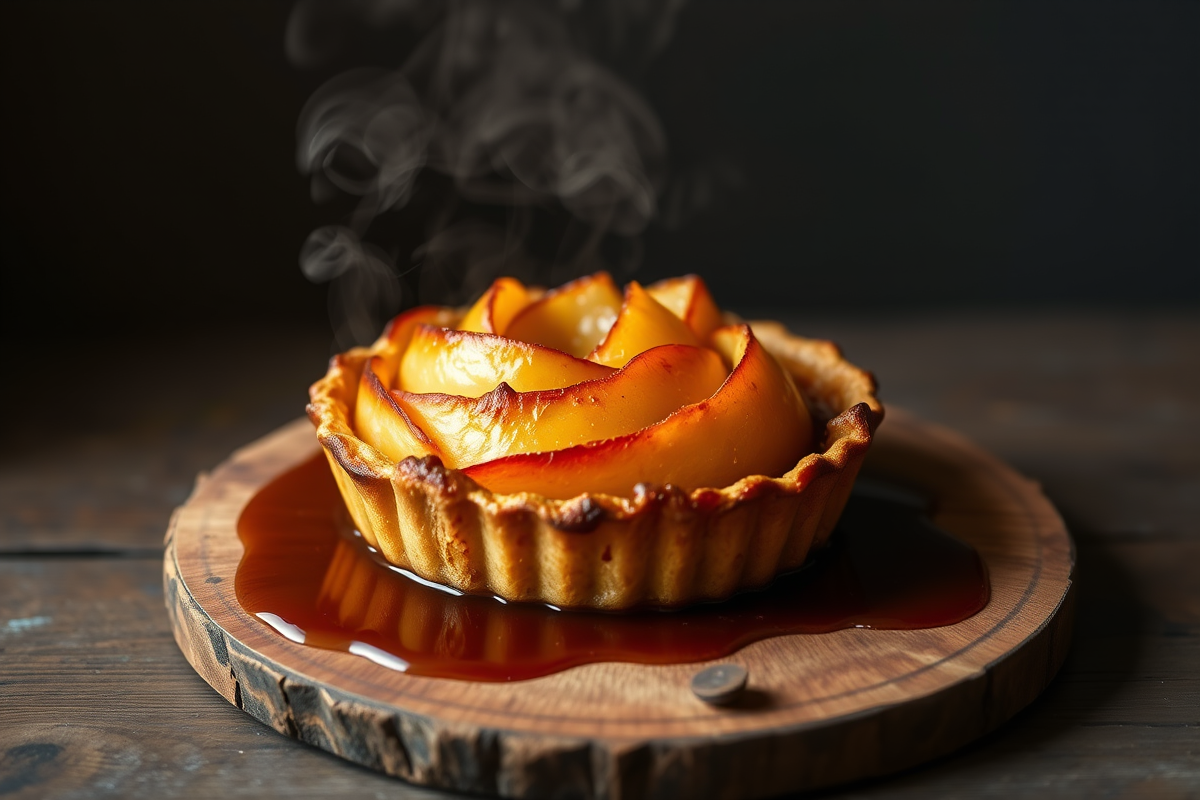
The tarte tatin originated in France as a clever way to rescue slightly overripe apples, and it has since become a European pastry icon. Its magic lies in the caramel melting into the fruit and the puff pastry turning crisp when flipped.
Ingredients
How many are you cooking for?
Original recipe for 6 servings
- 6 medium Golden or Fuji apples
- 150 g white sugar
- 50 ml cold water
- 100 g unsalted butter
- 1 rectangular puff pastry sheet (300 g)
- 1 teaspoon vanilla extract
- 1 pinch fine salt
Step by step
Follow the timeline: technique icon, time and temperature when relevant.
- Step 1 Cook 10 min
Melt the sugar with water and butter in a heavy-bottomed skillet over medium heat; stir constantly with a silicone spatula until it reaches an amber golden tone, then immediately remove from heat to prevent the caramel from burning and developing bitter notes.
- Step 2 Cut 10 min
Peel the apples, remove the cores with a corer and cut them into uniform quarters; place them in a bowl with lemon juice and salt to prevent oxidation and preserve their natural firmness while you prepare the caramelized base.
- Step 3 Assemble 5 min
Arrange the apple quarters in a spiral over the hot caramel, slightly overlapping them toward the center of the skillet; this layered arrangement allows the juice to flow evenly and prevents gaps that could leave the pastry damp at the end.
- Step 4 Prep 5 min
Roll out the puff pastry sheet on a lightly floured surface, cut a circle that completely covers the apples and press the edges against the skillet to seal; prick the top surface with a fork to facilitate steam escape and prevent uneven puffing.
- Step 5 Oven 35 min 180 °C
Place the skillet in an oven preheated to 180 °C for 35 minutes, until the pastry is golden and the caramel is bubbling; check the color in the last five minutes to control caramelization without burning the edges.
- Step 6 Cool 10 min
Let the tarte tatin rest at room temperature for 10 minutes before running a thin knife around the edges and flipping it onto a flat plate; this cooling time allows the caramel to settle and reduce its liquidity, ensuring a clean unmolding without spills.