
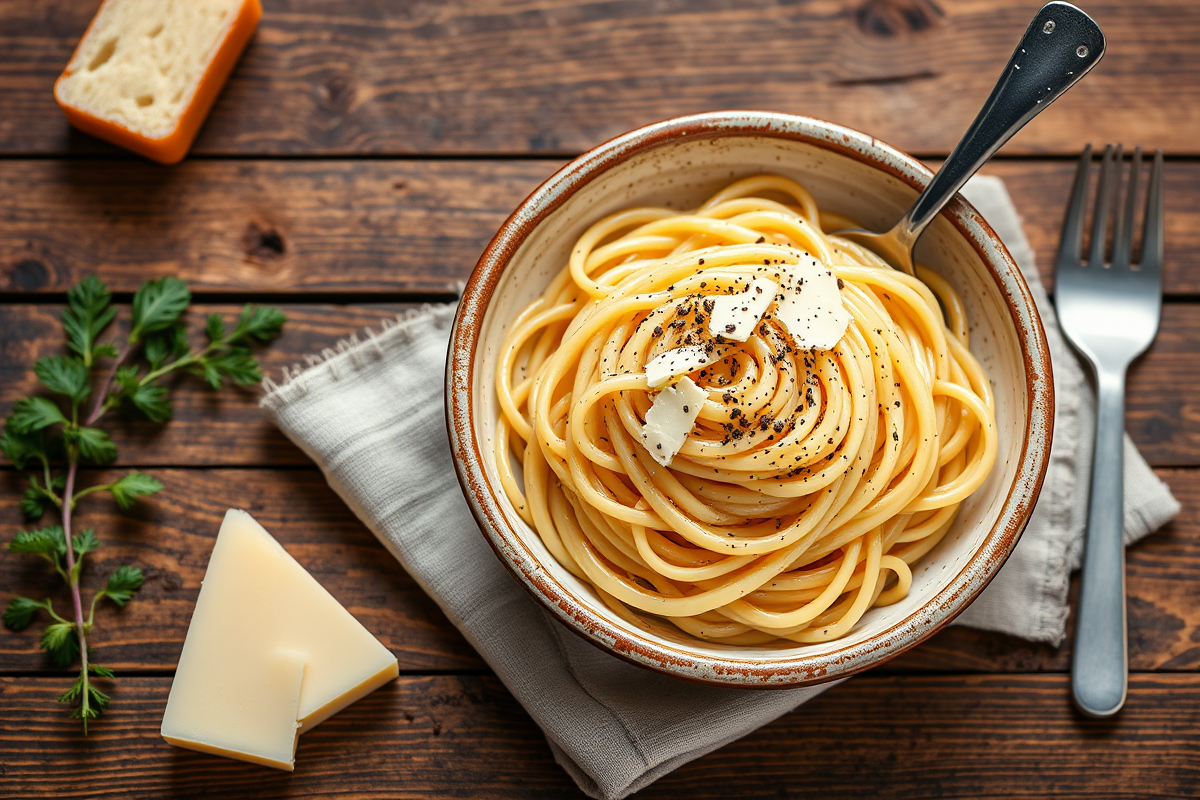
Carbonara is the cornerstone of Roman cuisine, and its secret lies in the emulsion of eggs and cheese, never cream. This recipe strictly respects the original tradition, achieving a silky sauce that clings to every al dente strand.
Ingredients
How many are you cooking for?
Original recipe for 4 servings
- 320 g spaghetti or rigatoni
- 150 g guanciale cut into thick strips
- 4 fresh egg yolks
- 1 large whole egg
- 100 g finely grated Pecorino Romano
- Freshly ground black pepper
- Salt for boiling water
Step by step
Follow the timeline: technique icon, time and temperature when relevant.
- Step 1 Cook 10 min
Bring a large pot of water to a rolling boil. Once boiling, add two generous handfuls of coarse salt (like seawater) and cook the spaghetti until al dente, checking the packet time. Trick: reserve 250 ml of the cooking water before draining; it is the secret asset for creating a stable emulsion.
- Step 2 Pan 10 min
Cut the guanciale into 1 cm thick strips and place them in a wide, cold skillet. Turn the heat to medium-low and let the fat render slowly for 8-10 minutes. Do not add oil or butter; the guanciale only needs its own fat to crisp and brown without burning.
- Step 3 Mix 3 min
In a heatproof bowl, whisk the four yolks together with the whole egg using a fork. Incorporate 80% of the finely grated Pecorino Romano and mix until homogeneous. Add a heaping tablespoon of freshly ground black pepper; the guanciale fat will activate its aromatic oils.
- Step 4 Prep 1 min
When the guanciale is golden and crisp, transfer the strips to the egg mixture bowl, but leave the liquid fat in the skillet. Turn off the heat immediately to prevent the eggs from scrambling. The skillet must be completely off the heat source.
- Step 5 Mix 1 min
Pour the drained pasta directly into the skillet with the guanciale fat (heat off). Toss with tongs for 30 seconds to coat every strand with starch and fat. This creates the physical base for the sauce to cling perfectly without forming lumps.
- Step 6 Mix 3 min
Add the egg and cheese mixture over the hot pasta in the skillet. Agitate vigorously for 2-3 minutes, adding the reserved starchy water ladle by ladle (about 100 ml). The residual heat and agitation will create a creamy, glossy mousse-like emulsion, never cooked.
- Step 7 Serve
Serve immediately on warm plates. Finish with the remaining Pecorino and a crack of black pepper. Carbonara must be eaten within minutes of plating; if it cools, the fat solidifies and the texture changes drastically. Pair with a crisp white wine if desired.