
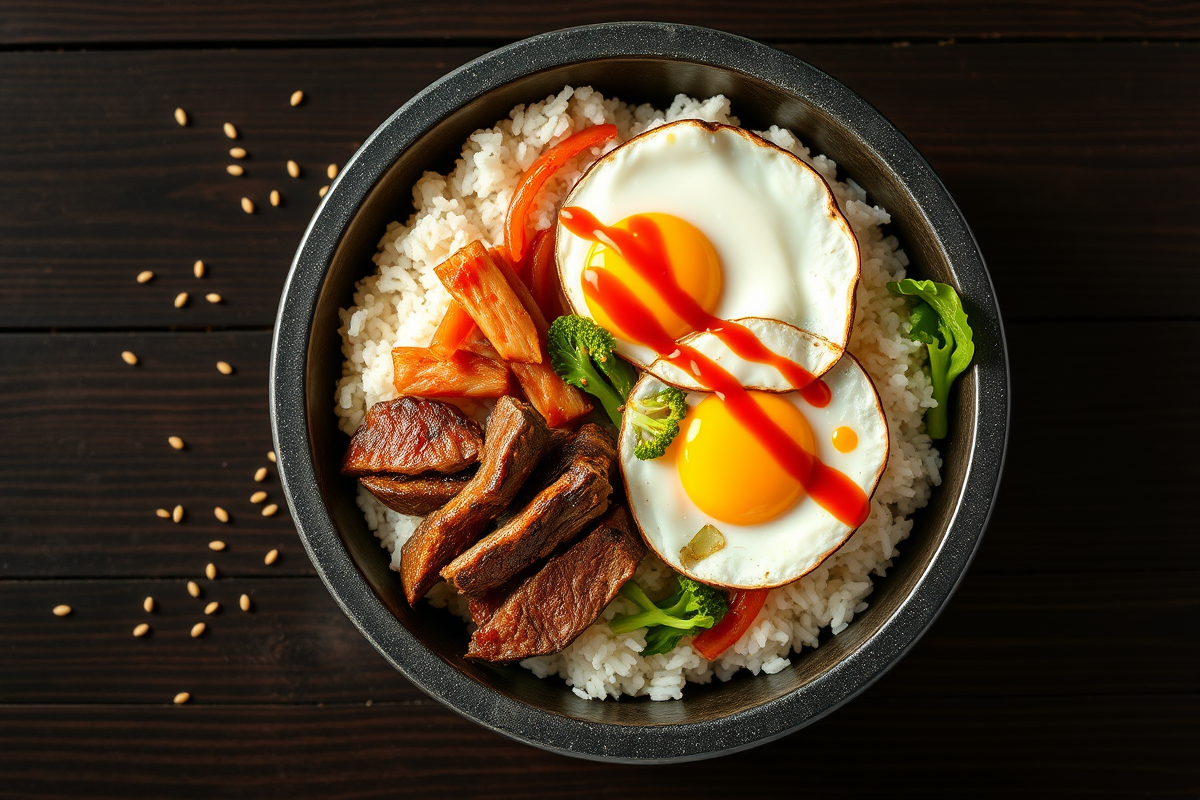
Bibimbap is a Korean classic that combines rice, proteins, and vegetables in a single bowl, topped with a fried egg and spicy sauce. Its name literally means 'mixed rice', and its magic lies in the balance of textures and umami flavors. Making it at home is easier than it looks and lets you control every ingredient.
Ingredients
How many are you cooking for?
Original recipe for 4 servings
- 2 cups Japanese rice
- 500 g beef strips, thinly sliced
- 3 tbsp soy sauce
- 2 tbsp sesame oil
- 1 tbsp gochujang
- 1 egg per serving
- 1 cup shredded carrot
- 1 cup fresh spinach
- 1 cup bean sprouts
- 1 cup shiitake mushrooms
- 1 white onion
- 2 garlic cloves
- 1 tbsp rice vinegar
- Toasted sesame seeds
Step by step
Follow the timeline: technique icon, time and temperature when relevant.
- Step 1 Cook 18 min
Rinse Japanese rice until water runs clear; cook in a pot with cold water for 18 minutes. Trick: add a pinch of salt and let it rest covered for 10 minutes so grains stay loose and don't stick to the bowl.
- Step 2 Marinate 15 min
Slice beef into 1 cm strips and marinate in a bowl with soy sauce, minced garlic, sesame oil and a touch of sugar. Let rest for 15 minutes; the salt and mild acid soften the fibers for a tender texture.
- Step 3 Pan 3 min
Peel and julienne carrots; sauté in a skillet with a teaspoon of oil over medium-high heat for 3 minutes until tender but crisp. Add a drop of vinegar at the end to keep their bright color.
- Step 4 Pan 1 min
Sauté fresh spinach in the same skillet for only 60 seconds until wilted; drain well and toss with a drizzle of sesame oil and salt. Avoid overcooking so they don't release water and dampen the rice.
- Step 5 Pan 4 min
Sear sliced shiitake mushrooms in a little oil over high heat for 4 minutes; remove and set aside. The dry heat of the skillet concentrates their natural umami without adding extra fats.
- Step 6 Pan 2 min
Fry eggs in a non-stick skillet with hot sesame oil; cook for 2 minutes until whites set but yolk stays runny. This step is key: the creamy yolk acts as a natural sauce when mixed.
- Step 7 Assemble 1 min
Assemble each bowl by placing a rice base, arranging vegetables and beef in circular sections, and topping with the fried egg. Add gochujang to taste and mix vigorously before eating to blend all flavors.