
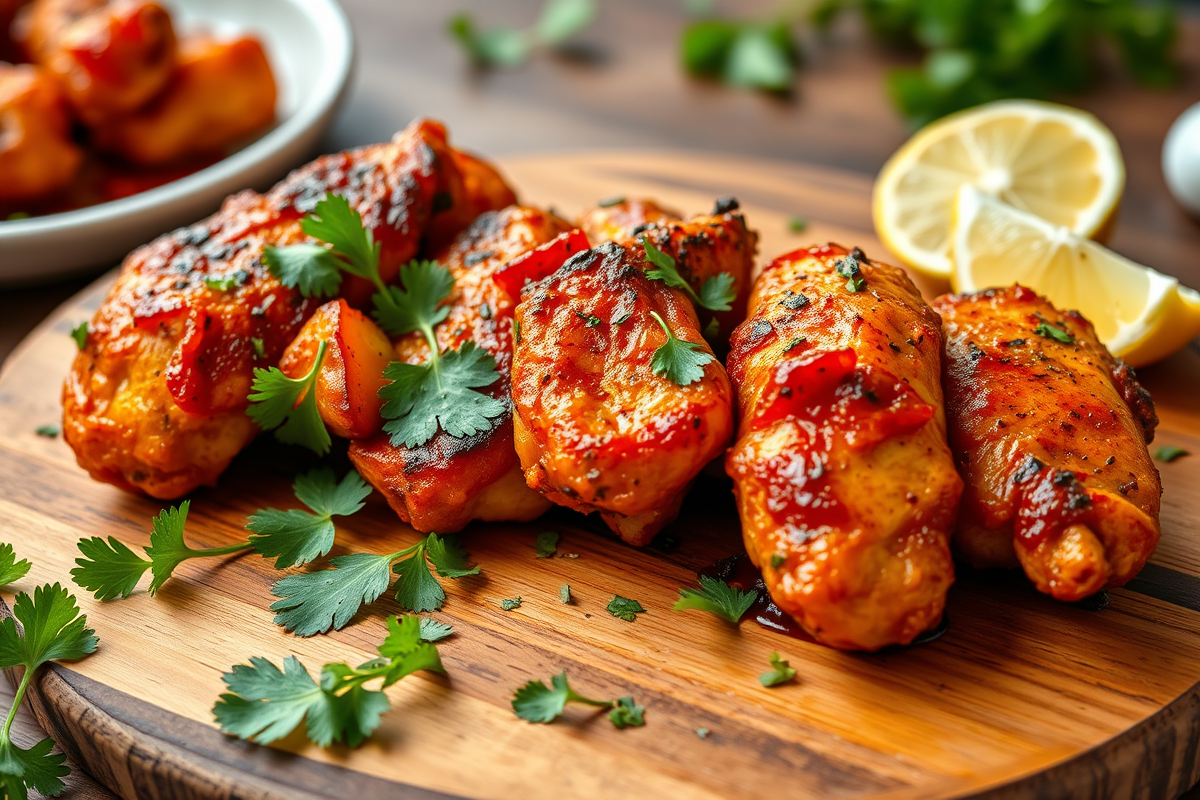
Tandoori chicken is a staple of Indian cuisine known for its yogurt-based marinade and vibrant spices. This home oven method recreates the smoky, tender flavor of a traditional clay oven, letting you enjoy an aromatic dish without any special equipment.
Ingredients
How many are you cooking for?
Original recipe for 4 servings
- 800 g boneless chicken thighs
- 200 g plain whole milk yogurt
- 2 tbsp ginger-garlic paste
- 1 tsp turmeric powder
- 1 tsp ground cumin
- 1 tsp garam masala
- 1 tsp sweet paprika
- 1 tbsp lemon juice
- 1 tsp salt
- 2 tbsp olive oil
- Fresh cilantro for garnish
Step by step
Follow the timeline: technique icon, time and temperature when relevant.
- Step 1 Mix 5 min
Pat dry the chicken thighs thoroughly. In a large bowl, whisk together the yogurt, ginger-garlic paste, turmeric, cumin, garam masala, paprika, lemon juice, and salt until smooth. The lactic acid in the yogurt breaks down proteins, guaranteeing exceptionally tender meat.
- Step 2 Marinate 30 min
Coat each piece evenly with the marinade, massaging it into the edges. Cover with plastic wrap and refrigerate for at least 30 minutes; leaving it overnight will deepen the flavor and improve the texture significantly.
- Step 3 Oven 220 °C
Preheat your oven to 220 °C on fan mode. Place a metal wire rack over a foil-lined baking sheet; this setup allows hot air to circulate around the meat and prevents it from steaming in its own juices.
- Step 4 Oven 25 min 220 °C
Arrange the chicken pieces evenly on the rack, ensuring they do not touch each other. Place the tray in the middle of the oven and bake for 25 minutes; the dry heat will caramelize the natural sugars in the yogurt.
- Step 5 Cook 5 min
Halfway through, carefully remove the oven and baste the chicken with the golden liquid collected in the lower tray. This step is crucial for retaining moisture and achieving that signature tandoori gloss.
- Step 6 Rest 5 min
Remove the chicken when edges show slight charring and internal temperature reaches 75 °C. Let rest on a clean board for 5 minutes before cutting; this allows juices to redistribute and prevents the meat from drying out when served.