
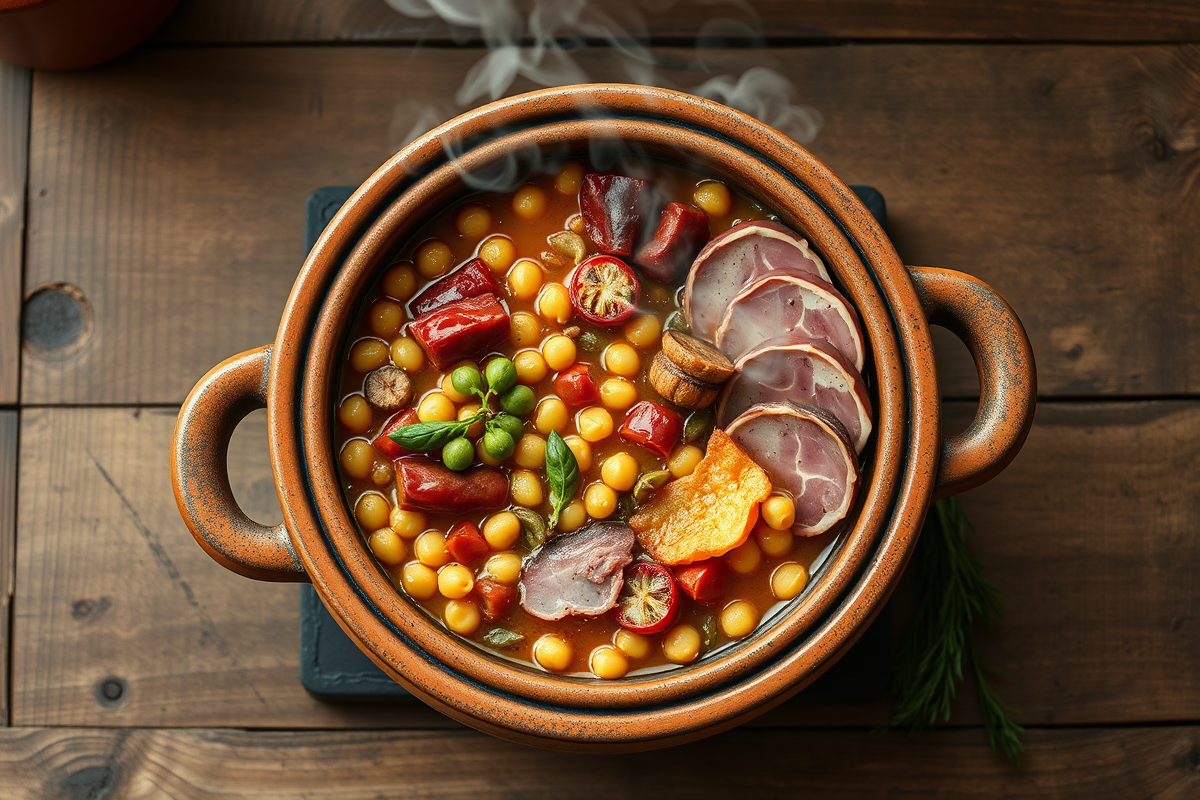
Cocido madrileño is far more than a stew; it is a culinary ritual divided into three distinct courses or 'volteos'. Originating from Madrid's farmhouse kitchens, it combines the creaminess of chickpeas with a seasonal vegetable medley and a selection of cured and fresh meats that elevate every bite.
Ingredients
How many are you cooking for?
Original recipe for 6 servings
- 500 g dried chickpeas
- 1 whole chicken, chopped (approx. 1 kg)
- 400 g stewing beef, cubed
- 150 g chorizo de la tierra
- 100 g morcilla de Burgos
- 100 g cured pork bacon
- 1 medium turnip
- 2 large potatoes
- 2 carrots
- 1 leek
- 1 cauliflower head
- 2 garlic cloves
- 1 bay leaf
- Fresh parsley bunch
- Extra virgin olive oil
- Coarse salt and black pepper
Step by step
Follow the timeline: technique icon, time and temperature when relevant.
- Step 1 Prep 720 min
Place 500 g of dried chickpeas in a large bowl and cover with plenty of cold water for 12 hours; this long soak softens the skin and drastically reduces cooking time. Drain them and transfer to a pressure cooker or clay pot with cold water until fully submerged. The initial soak is crucial to prevent the chickpeas from bursting during boiling.
- Step 2 Cook 20 min
Begin cooking over medium-high heat and add a parsley bunch, one bay leaf, and one whole peeled garlic clove; let the broth rise slowly without violent boiling for the first 20 minutes. Gentle simmering preserves chickpea integrity and extracts a clean flavor. Always start with cold water so the meat and legumes absorb the broth progressively.
- Step 3 Pot / simmer 60 min
Add the 'zapatilla' of vegetables: turnip, potato, carrot, leek, cauliflower, and roasted garlic, tying them in a cheesecloth or leaving them loose if you prefer a richer broth; cover and cook for another 60 minutes. The vegetables release pectin and natural sugars that give body to the broth without artificial thickeners. Cut potatoes into large chunks to prevent them from completely disintegrating.
- Step 4 Pot / simmer 45 min
Incorporate 1 chopped chicken, 400 g of stewing beef, and the cured meats (chorizo, morcilla, bacon) just as the chickpeas become tender; lower the heat and let it simmer for 45 minutes. The meat adds collagen and fats that enrich the stew's texture. Do not add salt yet; the sausages already provide their salty point and you will avoid excess.
- Step 5 Prep
Remove the meat pieces with a slotted spoon and reserve the vegetables in a deep bowl; strain the broth through a fine sieve, gently pressing the vegetables to release their flavor. This step defines first course and guarantees a clean, golden broth. Keep the broth hot in the pot, covered, so it does not lose temperature or aroma.
- Step 6 Cook
Prepare the second course by plating the sliced meats alongside the chickpeas and vegetables; for the third course, cook noodles in the same broth with a quick garlic and sweet paprika sauté. The pasta absorbs the fat and umami of the broth, creating a perfect contrast. Fry the paprika for 10 seconds in hot oil before adding it to the broth to activate its pigments without bitterness.
- Step 7 Serve
Plate each component separately and garnish with freshly chopped parsley right before serving; adjust final salt only if needed and accompany with a crusty loaf of bread. The traditional order respects individual flavors and prevents the pasta from becoming too soft. Serve immediately to enjoy the correct temperature and texture.