
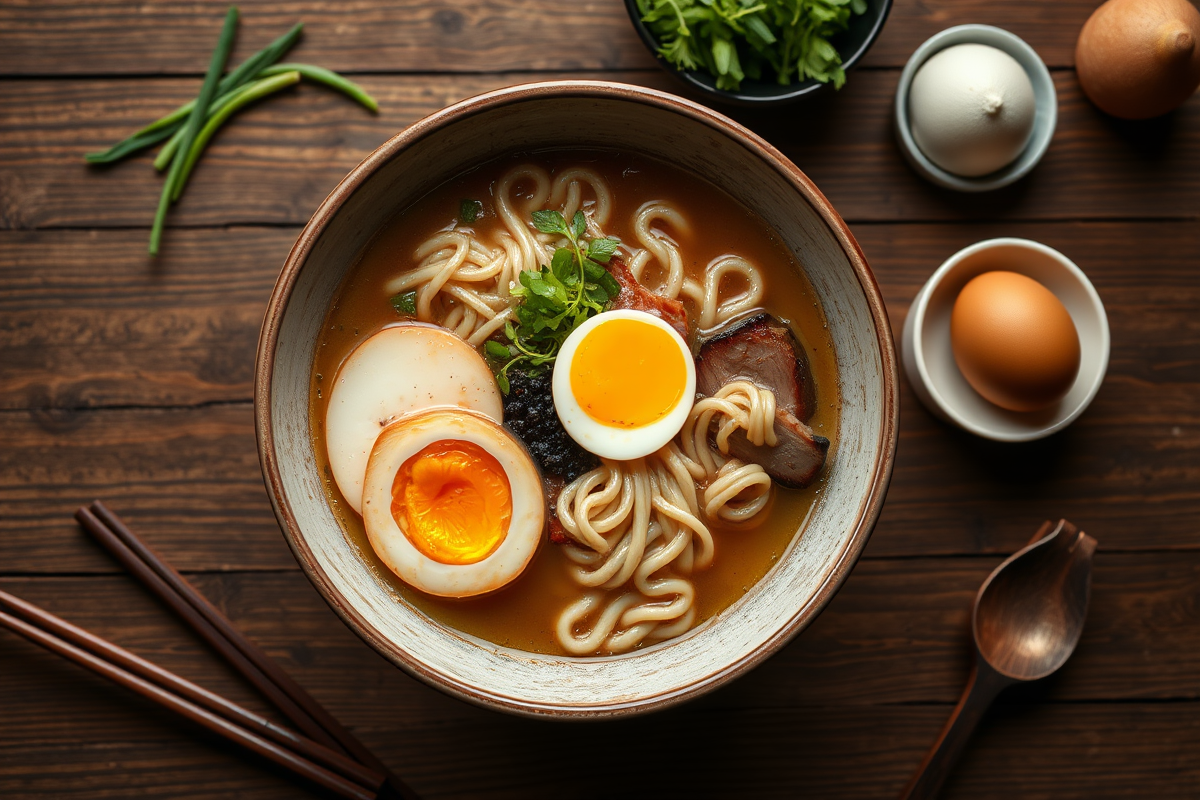
Shoyu ramen is a Japanese classic that balances a savory, aromatic broth with elastic noodles and juicy toppings. This homemade version lets you control the broth quality and customize toppings to achieve that restaurant experience in your own kitchen.
Ingredients
How many are you cooking for?
Original recipe for 4 servings
- 1 kg pork and chicken bones for broth
- 1 large onion halved
- 4 garlic cloves smashed
- 3 cm fresh ginger sliced
- 20 g kombu (dried kelp)
- Cold water to cover
- 400 g fresh or dried ramen noodles
- 60 ml shoyu (soy sauce)
- 30 ml mirin
- 15 ml sake
- 1 teaspoon sugar
- 4 eggs for ajitsuke tamago
- 200 g pork belly for chashu
- Chopped scallions, nori, and sesame seeds for garnish
Step by step
Follow the timeline: technique icon, time and temperature when relevant.
- Step 1 Prep 135 min
Place pork and chicken bones in a large pot, cover with cold water, and bring to a boil. Once boiling, reduce heat and skim the foam that forms constantly for 15 minutes to get a clean broth; add the onion, garlic, and ginger to infuse aromas. Simmer on low heat covered for 2 hours to extract gelatin and deep flavor.
- Step 2 Mix 5 min
While the broth cooks, prepare the tare by mixing shoyu, mirin, and sake in a bowl; this salty concentrate is essential for the umami flavor of shoyu ramen. Reserve in a clean jar; the tare keeps in the fridge for up to 2 weeks and enhances the dish's flavor.
- Step 3 Cook 7 min
For the ajitsuke tamago eggs, cook eggs in boiling water for exactly 6.5 minutes to achieve a creamy yet firm yolk. Drain immediately, peel carefully by submerging in cold water, and place in a container with tare mixed with water and sugar; marinate for at least 4 hours to absorb the flavor.
- Step 4 Marinate 240 min
For the ajitsuke tamago eggs, cook eggs in boiling water for exactly 6.5 minutes to achieve a creamy yet firm yolk. Drain immediately, peel carefully by submerging in cold water, and place in a container with tare mixed with water and sugar; marinate for at least 4 hours to absorb the flavor.
- Step 5 Pan 10 min
Cut pork belly into thick strips and sear in a pan with a little vegetable oil over medium-high heat until crispy on the outside; this homemade chashu adds texture and aromatic fat that enriches the broth. Remove from heat and reserve; you can slice thinly when assembling the ramen.
- Step 6 Assemble 5 min
To serve, place 2 tablespoons of tare in each bowl, add boiling broth, and stir well; place drained noodles on top and garnish with halved eggs, chashu strips, scallions, nori, and sesame seeds. Serve immediately to enjoy the heat and fresh texture of the ingredients.